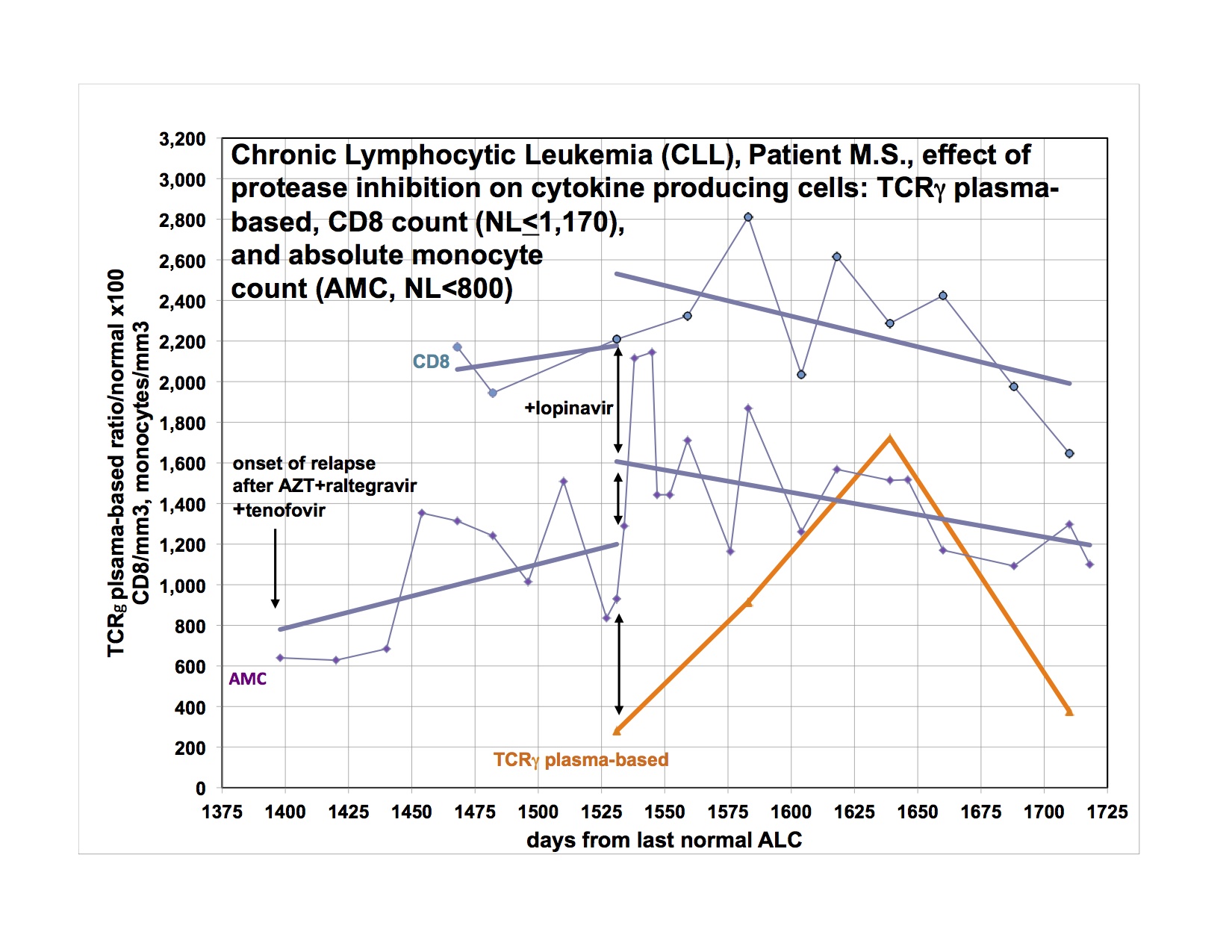
The quest for identifying and treating retroviruses that are involved in the pathogenesis or CFS/ME, neuroimmune, autoimmune and neoplastic disorders will not end today despite the negative results of the XMRV, pMLV study. I have CFS/ME and cancer. My data supports the presence and importance of retroviruses in the pathogenesis of both disorders and the potential for anti-retroviral drugs to help us.
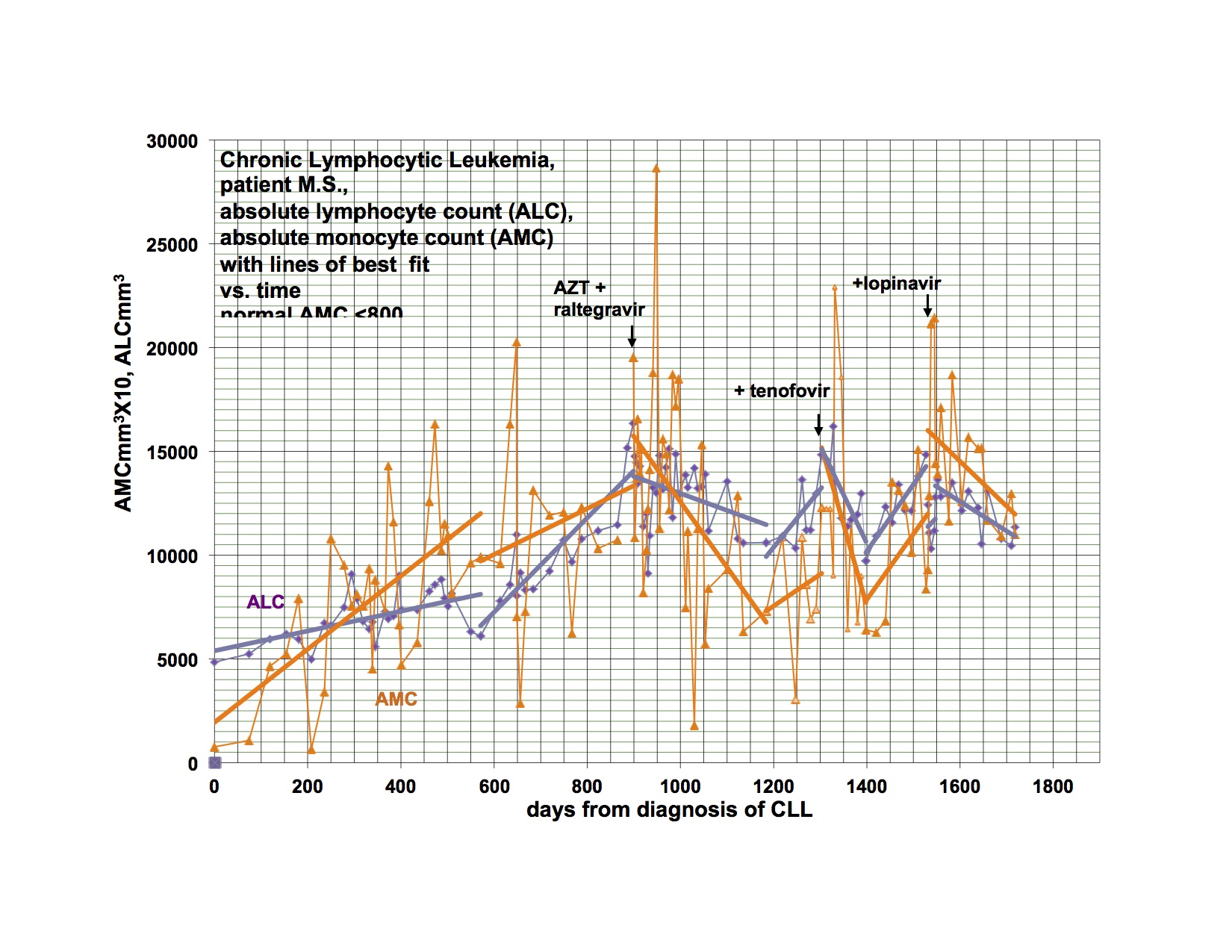
My data shows the presence of a clonal T-lymphocyte expansion which is probably CD8 cells. Having a clonal T-lymphocyte expansion is abnormal. In addition, I have increased monocytes (monocytosis). I have looked at 56 of my patients with various types of cancer and half of them also have a detectable T-lymphocyte expansion and monocytosis. My point is that what I see in myself may be a common phenomenon and actually may be happening in millions of people. I haven’t looked in CFS/ME, because I limit my practice to Hematology-Oncology.
T-lymphocytes and monocytes are important because they are permissive of retroviral invasion and because they are pre-programmed to make cytokines. Presumably the increased numbers of these cells after infection has occurred would lead to increased amounts of cytokines that would dysregulate the immune system. In addition, monocytes give rise to the microglial cells which migrate to the brain and spinal cord and potentially could deposit abnormal amounts of cytokines in direct proximity to the neural elements.
Dr. Lipkin mentioned a polyclonal expansion of B-lymphocytes as important in our type of disorder and this could be a result of the increased amount of cytokines. In fact, in my patients who had a clonal T-lymphocyte expansion and/or monocytosis, 50% had autoimmune markers. What is reasonable to postulate is that we now have explained the known connection between inflammation and cancer and neurodegenerative disorders and it all goes back to the retroviruses.
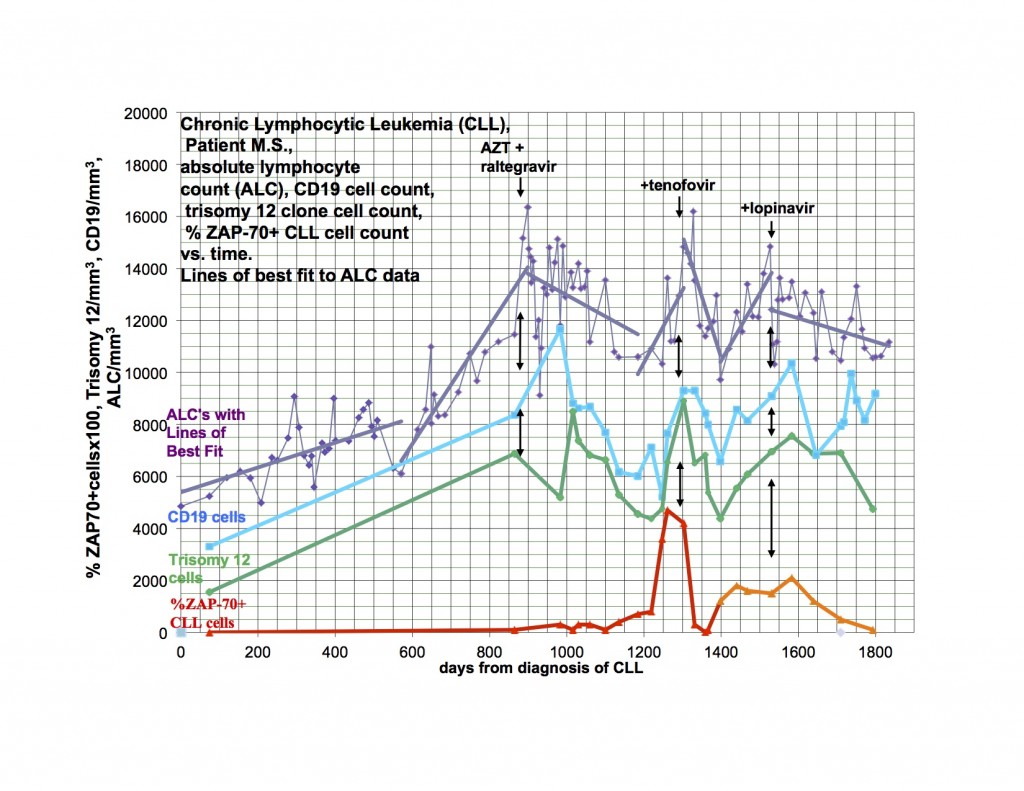
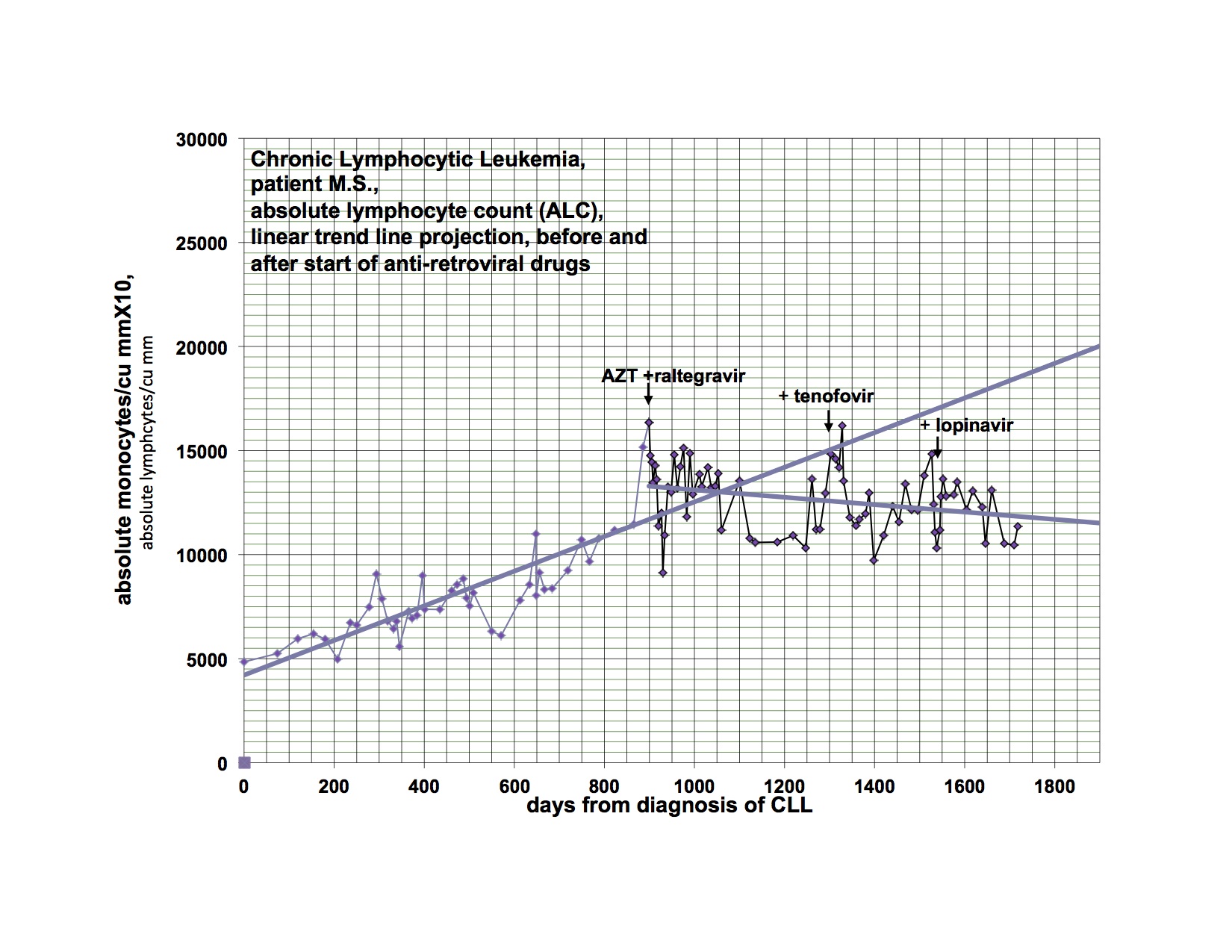
I have previously shown response of my leukemia, monocytosis and clonal T-cells to AZT, raltegravir and after relapse a second response to the addition of tenofovir. I had hoped to demonstrate that a PI would be valuable treatment and waited to add this category of drug until relapse. My leukemia responded and relapsed in parallel with the monocytosis and clonal T-cell expansion but at a somewhat different rate.
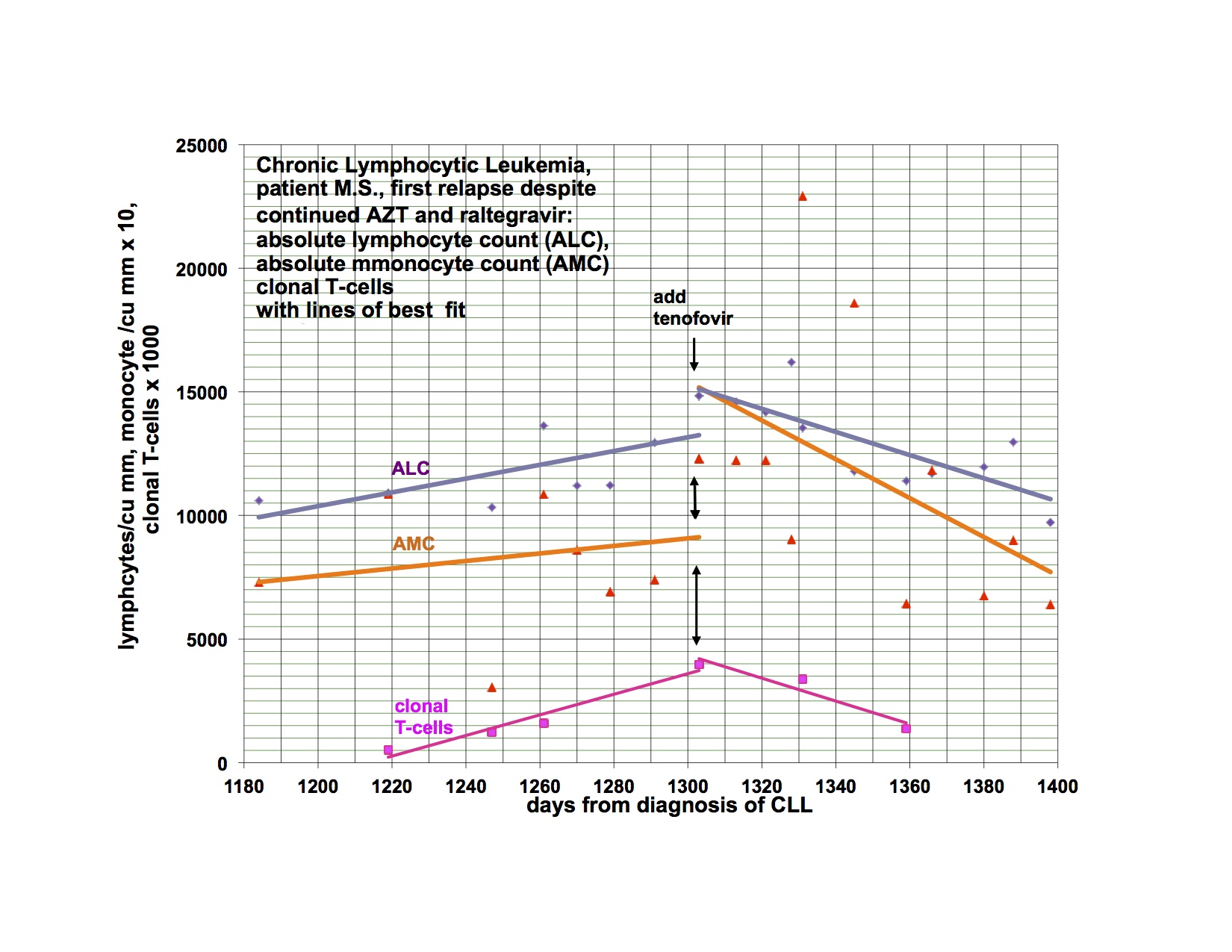
The last graph shows that the clonal T-lymphocytes, CD8 lymphocytes and monocytes were increasing after relapse on AZT, raltegravir and tenofovir. Quest discontinued doing the quantitative TCRγ in 2011. As a favor to me, Quest put it up but with different reagents so that the results from the new assay are not superimposable over 2011’s. Please note that the clonal TCRγ values are a ratio rather than an absolute number of cells.
I didn’t have the new clonal T-cell assay available until later in the graph and didn’t think of looking for CD8 cells initially. After the relapse was clearly documented, I added the PI, lopinavir. The T-cell parameters and monocytes continued to trend up for the next 4-8 weeks before clearly trending down.
The only reasonable explanation for what has happened to me and what I have found in half of my cancer patients is that retroviruses participate in the pathogenesis of our illnesses. Please note that I do not claim that the retroviruses cause the illnesses but emphasize that the retroviruses participate in the pathogenesis. The likelihood is that genetic susceptibility and toxic exposure determines whether an infected person would develop disease and how it would be manifested.
It is clear to me from the data I have, that many people have susceptibility to develop disease after infection with retroviruses. It is now up to the scientists to identify the infection and the basis of genetic susceptibility. Once there are easy methods to identify who is infected and with what, treatment trials could be started. We must go forward.
“This is a court of law, young man, not a court of justice.”
~ Oliver Wendell Holmes, Jr.
The WPI’s lawsuit against it’s former chief scientist continues to cut its swath of destruction through the heart of the ME/CFS community. Dr. Judy was forced to declare bankruptcy yesterday. She has already spent her retirement on lawyers and now she will lose one, if not both, of her two small condominiums, which one still to be determined by a bankruptcy trustee. And most importantly, she isn’t working on our behalf…
Here’s a letter posted this morning on the Messages of Support for Dr. Judy Mikovits FaceBook page (there are several such pages with hundreds of members):
Dear Judy,
It is beyond me that in this day and age this injustice is allowed. I am not a naive person but I had hoped that the 21st Century would bring a greater justice and compassion to the world.
How can these corrupt people be able to ruin, mentally, physically and personally an innocent and truly good individual?
I am deeply sad.
Me too. It is beyond crazy. A travesty of justice. A misuse of the system. The WPI, a non-profit, spent large amounts of money on lawyers to write hundreds of pages of legal documents, to destroy what was in fact their only resource. To what end? They knew there was nothing to get monetarily. An apology? What a joke. Even if they were right, which they aren’t, what would someone interested in the greater good have done when confronted with the problems that Annette Whittemore was confronted with?
In a nutshell, this is where the case stands. The first judge ruled against Dr. Mikovits in a default judgement because she wouldn’t give up her personal email which contained confidential information on many study participants. Then he recused himself to make sure there was no appearance of impropriety, since he had received significant campaign contributions from Harvey Whittemore, who is under indictment for making illegal political contributions and lying to the FBI, not to mention his other business problems: Ex-business partners: Whittemores owe more than $24M. Of course, Harvey claims to have nothing to do with the WPI. So a new judge was appointed. One would have thought that the opportunity would have been seized to right the wrong and run the case as it should have been run in the first place, but no, the judge decided to continue where the old judge left off, leaving the judgement in place, with a “prove up” hearing scheduled for today, to determine an amount, thus forcing the bankruptcy.
The WPI wants Dr. Mikovits to pay for their loss of donations compared to before she was fired. As if they didn’t cause it all with their own actions!! They didn’t have a fund raiser this year because who would be there? They want back her entire 5 years of salary, during which she was desperately trying to, and in fact did, help their daughter. Plus, they want the entire cost of the research program from inception. Oh, and the punitive multiplier for her “bad behavior” since she was fired! And they want their legal fees, so they don’t have to defraud the community and the NIH to pay their lawyers. Of course Dr. Mikovits has no money…
Meanwhile, back at the ranch, not a peep of anything worthwhile, not a paper, not even a kept up website: Research Studies and Clinical Trials. Just pleas for more money. Perhaps for the CEO’s upcoming defense? Although the piece by Casey Schwartz in the Daily Beast, How Research into Chronic Fatigue Syndrome Turned into an Ugly Fight, had the toned down feel of tight editorial control, it did state that Dr. Mikovits was fired after demanding the commercial lab, VIP Dx, stop selling an unreproducible test.
In July 2011 she told Harvey Whittemore of the potential contamination, she says, and expected that the VIP Dx lab would cease testing patients for the XMRV virus. “I just kept saying, stop it, stop it, stop it. We have to sort this out,” Mikovits says. According to Mikovits, the testing did not stop. And after a tense summer, she was fired in September.
Let’s not forget what this is really about, not some imaginary IP in some old notebooks, but the thousands of bogus tests that were sold, some after they knew they were bogus, some paid for by Medicare?
The fall out from it all? The WPI’s legacy, from an advocate of 20 years, posted to FaceBook last night and republished with permission.
My Opinion: We’ve been ized
~by John Herd
The Whittemores overly self-mesmerized
Their grandiosity so fantasized
Just because of money legitimized?
They expected to be idealized
Constructive input demonized
As sound advocates often minimalized
While many amongst us patronized
And those with differing views were ostracized
Obligations amortized
Stupid actions authorized
Moral integrity compromised
“For the sake of patients” bastardized
Sound PR strategies brutalized
With so much about WPI fictionalized
In fake news coverage televised
Fabrications on the Internet digitalized
Research assets cannibalized
Clinically unvalidated test commercialized
Protecting scientific data criminalized
While Judy Mikovits sat in jail demoralized
Judicial corruption legalized
Their lavish travel and living publicized
Questionable scientific integrity sanitized
As their research director was victimized
The whole view of CFS jeopardized
By the WPI saga being so scandalized
An insult to patients already traumatized
From misinformed views of the illness so hypothesized
All WPI’s books should be scrutinized
With all their records analyzed
If they’ve not yet been sterilized
And financial assets vaporized
From the CFS world they should be exorcised
Because they added to our being even more stigmatized
Let’s face it, we’ve been sodomized
But oh how nicely Annette is accessorized
Today’s song: Which Side Are You On? Performed by Natalie Merchant
And a modern version of this classic protest song by Ani Difranco
How strange these last few weeks have been! The little group of haters who have decided that destroying me is a worthwhile use of their energy has thus far succeeded in inspiring many, many people to write to me voicing support and trust. I’m not going to play games and say that this hasn’t been very hurtful, especially to my husband and patients, but since I didn’t do anything wrong, there is no real threat behind it. I sent a very lengthy summary with two pages of recommendations to Andrew’s doctors. I have no real exposure in this case from either a disciplinary or malpractice point of view. All sound and fury, signifying nothing. Medical boards don’t pay attention to crazy people from the internet complaining about doctors they have never met. The case is perfectly documented in EMR, signed and sealed. I did nothing wrong. The real question is why would other patients try to take out one of the very few doctors available with a useful approach to the disease, as documented often in the comments on this blog? Pretty sick.
Many of the letters I’ve received use metaphors involving poop or shit. Here is my favorite:
If someone hands you a bowl of baby shit, say “No thanks, this belongs to you”. ~ attributed to an anonymous Sikh guru
The elephant in the last blog left a big pile on my front lawn. I could move, put up a fence to keep it on the other side, or I can stay and clean it up. I wrote a reply to the document that Petrison put up on the internet. I stand by what it said, though it bothered me to give it the attention here, when the papers in the last blog are what we should be thinking and talking about. There are scientists and doctors reading, while Petrison and her little band of cyberstalkers make Simon Wesseley look like he is onto something. I took the last blog down in good faith as part of an agreement brokered by a friend at Jacqueline’s request. I was told she had agreed to take hers down if I did. I took mine down, though I am told it is posted somewhere, which is fine with me since hers is up. I imagine Jacqueline is now figuring out that she was used, since her new playmate controls the “interview”. They are most likely already fighting with each other, since Jacqueline needs Andrew to stay well and Lisa needs him to be sick.
Good work hurting fellow sufferers, “mold warriors”. Rather icky behavior, giving ammunition to the likes of ERV. Create a downpour and all the worms come out of their holes. It doesn’t really hurt me. I have a wait list. I’ve been near death, unnecessarily, because of misunderstanding of my illness, and my reputation isn’t what’s important to me. In fact, it is nothing, compared to being able to reach fellow sufferers. This nonsense is the price for not being invisible. I’m getting traffic from ERV’s blog, people that stay to read mine and then write to thank me, so it’s all fine. It’s the nature of the internet. Being open makes one a target. It won’t silence me. I will tighten things up even further on the professional side, so I can’t be hurt, but I am a patient and the mother of a patient first and foremost.
It is sad that sick people had to spend time and energy reading and answering 100 plus pages of drivel, a smear campaign. The moldies took their best shot and came up with the fact that I wear blue jeans a lot. Jacqueline was informed I dress informally before she planned the trip. There was a picture of me in jeans by the ocean with Andrew that Jacqueline posted. Lots of people wrote how wonderful that picture was. At the time my reply to friends was, “The kid looks good. The doctor looks haggard.” I was hanging on by a thread with the full weight of what I’d taken on upon me. Taking it all at face value now, the mother published her own accounts of how amazed she was because of Andrew’s progress shortly before she fired me. I was relieved because there were so many people who documented that he stayed improved after he was in my care, even at home. Now she says he didn’t improve until after he got new caregivers. So diametrically opposed accounts on different days, both in writing and in public.
Which brings us to the predators in our midst. Lisa Petrison has 540 “entries” on my blog since July 12 according to statcounter.com (as far back as the record goes with the current level of traffic). If she takes off 8 hours at night, that’s an average of every 50 minutes. Does that constitute stalking? I have received the most astonishing mail from prior followers of the “mold warriors”. It would appear that Petrison, in particular, is feloniously practicing medicine without a license, by managing medication. I have accounts of her bullying patients into stopping medication that could have resulted in harm or even death. She tells them to stop their meds abruptly, saying they will be able to do so without ill effect now that they are “clear”, camping in the desert away from the “ick”. It is documented in my mail with respect to a friend who was told to stop Klonopin abruptly. Abrupt cessation of longterm benzodiazepines can precipitate seizures; this class of drugs should always be weaned. Now I have other examples in my mail as well of her bullying people with respect to their meds. She should be offered hospital or jail.
For the record, Jacqueline led me to believe prior to arrival that she had read and understood my blog. She asked not one question the whole time, but acted like everything was crystal clear to her. She presented herself as very knowledgeable, vice president of an ME association in NI. Many of the things she now clearly didn’t understand were explained multiple times, sometimes in a group of Little Acorns members, and she acted like she understood all. The fixation on the word resuscitate is the funniest of all. I joked that if Andrew needed to be “resuscitated” after the day in Kona for labs, pharmacy, lunch and shopping, we could try a saline infusion the next day. It was in a private message, so in writing, and I made sure she knew it was an ER doctor joke. What can I say, she laughed at my jokes by Skype prior to coming.
And the notorious energy drink? We were in the market. Jacqueline saw the drink and went off on a tirade about how her doctor at home wouldn’t let her give Andrew energy drinks though they help him. Andrew drinks coffee in the morning at home, by the way. I took a look at the label. It contained B vitamins and amino acids, plus a small amount of caffeine, equivalent to 1 cup of coffee per drink. I didn’t like the preservatives, additives and sucralose in it, and I explained that to her, specifically saying I wouldn’t use it often, but I told her she could buy a single dose, if she wanted to try it for occasional use. I advised that she could try a third of an adult drink, on rare occasions, like the trip to the lab; so caffeine equivalent to a third of a cup of coffee, less than she gives him regularly at home and other very helpful things, such as taurine and phenylalanine. Andrew tried a third of one drink once in my presence and we noticed no effect at all. Now I hear Jacqueline is saying I told her to give it to him all the time. This is one of the few false statements being made that I can’t disprove in writing, but for that they want my license? So that another doctor can write a script for Adderall or Ritalin?
I hate being forced to respond to drivel. It is a loss for everyone involved. I tried to turn the other cheek, but am dragged in. I’ve lost one friend who has been taken in by the ruckus, hard as it is for me to imagine, as the false statements seem so transparent to me. I can spend a lot of money on lawyers or try to stop the haters this way. Petrison and the other cult members who call themselves mold warriors are a danger to the newly sick trying to figure out online what to do to help themselves. The “radical avoidance” approach is initially appealing to the desperate. The community needs to find a way to shut it down. My requests to ban them from the forums fell on deaf ears, which I find very disturbing and irresponsible.
Meanwhile my kid is doing fantastically well. Ali just finished her second semester of online college at U Mass Lowell with a 4.0 average. I offered Andrew the same extremely low risk treatments that have helped her so much and now I’m being persecuted for it. What a world!
And here’s what we should be talking about: Xenotropic and polytropic murine leukemia virus-related sequences are not detected in the majority of patients with chronic fatigue syndrome. Paolucci et al, which despite the misleading title says that 2 of 12 patients were in fact positive. Or not completely negative. So we have a developing trend. Even with the inadequate tools at hand, they are unable to miss it completely and in the name of scientific validity, have to admit parenthetically that it is all just a bit muddy. Apparently, current techniques are not up to the task of finding a retrovirus, or multiple retroviruses, with low copy numbers and high sequence diversity in unknown tissue reservoirs. One doesn’t have to be an expert in laboratory science to connect the dots presented in their own literature:
XMRV and polytropic MLV-related virus have been controversially associated with chronic fatigue syndrome (CFS). Subsequent reports failed to detect XMRV and MLV-related virus in CFS patients, and the previous results have been interpreted as a massive laboratory contamination by mouse DNA sequences. Among 12 sequential CFS patients, two were positive for XMRV/MLV sequences. In contrast, 40 selected control subjects were negative. CSF patients and controls were negative for mitochondrial mouse-specific DNA sequences. These findings do not confirm the high frequency of MLV-related viruses infection in CFS patients, but also contrast the widespread laboratory contamination previously suggested.
last paragraph:
These results would exclude the presence of contaminating mouse or plasmid DNA in reagents. In addition, the two positive amplicons showed different retrovirus sequences, thus excluding amplicon carry-over contamination. The data here reported are relevant to a small group of CFS patients, and studies in larger patient cohorts have not attributed an etiologic role for XMRV or MLVrelated viruses in CFS (Erlwein et al., 2010; Switzer et al., 2010; van Kuppeveld et al., 2010;Simmons et al., 2011). It is however intriguing that the only positive results were obtained in these patients. On the other hand, in both cases the positivity could not be confirmed by the amplification of a different virus gene. The proviral DNA amount was very low in our patients, which might explain the stochastic amplification of a single virus gene in each of the two positive patients. Another possibility is that only fragment of virus DNA might be present in biologic samples. In conclusion, while it appears established that XMRV/MLV sequences are not detectable in a significant proportion of CFS patients, the frequency and the role of evolutionary relic retrovirus sequences potentially detectable in the human chromatin remain to be further elucidated.
That doesn’t sound so negative to me…
We Shall Overcome performed by Bruce Springstein after the recent tragedy in Norway
The arrogance continues with the latest “contribution” from our government at work:
Curr Opin Virol. 2012 Jul 17. [Epub ahead of print]
Recombinant origin, contamination, and de-discovery of XMRV.
Delviks-Frankenberry K, Cingöz O, Coffin JM, Pathak VK.
Viral Mutation Section, NCI, HIV DRP, Frederick National Laboratory for Cancer Research, Frederick, MD, United States.
Abstract
The discovery and de-discovery of the xenotropic murine leukemia virus-related virus (XMRV) has been a tumultuous roller-coaster ride for scientists and patients. The initial associations of XMRV with chronic fatigue syndrome and prostate cancer, while providing much hope and optimism, have now been discredited and/or retracted following overwhelming evidence that (1) numerous patient cohorts from around the world areXMRV-negative, (2) the initial reports of XMRV-positive patients were due to contamination with mouse DNA, XMRV plasmid DNA, or virus from the 22Rv1 cell line and (3) XMRV is a laboratory-derived virus generated in the mid 1990s through recombination during passage of a prostate tumor xenograft in immuno-compromised mice. While these developments are disappointing to scientists and patients, they provide a valuable road map of potential pitfalls to the would-be microbe hunters.
Game. Set. Match. Everyone can take a sigh of relief. The human race is safe, as they’ve said all along. Scientists in a power postition at the NIH have closed their minds to retroviruses other than HIV and HTLV contributing to human disease. Is this really a scientific assessment of all the available data? Or a ploy to keep the blinders on a while longer? Baffle ‘em with bullshit.
There’s a giant elephant in the room. Several elephants actually. What if there’s more than this one virus that they acknowledge they created in the early 90′s? It seems likely that it’s happened more than once, given how many chances there have been to recombine and infect human cells? But they only infect human cells in tissue culture they say, not in vivo because we have restriction factors.
Here’s an experiment with human lymphoid tissue concluding we are safe:
Susceptibility of Human Lymphoid Tissue Cultured ex vivo to Xenotropic Murine Leukemia Virus-Related Virus (XMRV) Infection. Curriu et al.
Abstract
Background: Xenotropic murine leukemia virus-related virus (XMRV) was generated after a recombination event between two endogenous murine leukemia viruses during the production of a prostate cancer cell line. Although the associations of the XMRV infection with human diseases appear unlikely, the XMRV is a retrovirus of undefined pathogenic potential, able to replicate in human cells in vitro. Since recent studies using animal models for infection have yielded conflicting results, we set out an ex vivo model for XMRV infection of human tonsillar tissue to determine whether XMRV produced by 22Rv1 cells is able to replicate in human lymphoid organs. Tonsil blocks were infected and infection kinetics and its pathogenic effects were monitored
Results: XMRV, though restricted by APOBEC, enters and integrates into the tissue cells. The infection did not result in changes of T or B-cells, immune activation, nor inflammatory chemokines. Infectious viruses could be recovered from supernatants of infected tonsils by reinfecting DERSE XMRV indicator cell line, although these supernatants could not establish a new infection in fresh tonsil culture, indicating that in our model, the viral replication is controlled by innate antiviral restriction factors.
Conclusions: Overall, the replication-competent retrovirus XMRV, present in a high number of laboratories, is able to infect human lymphoid tissue and produce infectious viruses, even though they were unable to establish a new infection in fresh tonsillar tissue. Hereby, laboratories working with cell lines producing XMRV should have knowledge and understanding of the potential biological biohazardous risks of this virus.
So maybe they’ll take a few extra biohazard precautions for themselves, since they are working directly with these lab anomalies, but nothing to worry about for the general public. Never mind the millions of human canaries illuminating the destructive path we are on. Never mind that this could explain the observed increase in neuroimmune diseases, autoimmunity and cancer. Never mind that we’ve been mainlining attenuated viruses cultured in animal cells which express exogenous retroviruses for eighty years now. Never mind that these viruses cause similar diseases in other mammals to that which we are observing in humans. Never mind all the clinical evidence that several large patient cohorts, ME/CFS, ASD, GWI, chronic Lyme Disease, PANDAS, RRMS are related and contagious diseases. Leave it in the realm of genetic weaknesses for now. Better to be an ostrich for a while longer since the cat is so out of the bag. Let’s remain in denial for as long as we possibly can, which I guess will be until Quest has a DNA sequencing test that insurance will pay for. They are allowed to be literal and have limited vision in the name of science.
Comparing PreXMRV-2 gag sequence diversity in laboratory and wild mice using deep sequencing. Mayer et al.
Abstract
It has recently been reported that the xenotropic murine leukemia virus-related virus (XMRV) derives from a laboratory recombinant. However, sequences with characteristics of the 5′ half of XMRV (termed PreXMRV-2) have been identified in several laboratory mouse genomes and cell lines suggesting parts of the XMRV genome exist as naturally occurring retroviruses in mice. We compare here PreXMRV-2 gag sequence diversity in mice to that of reported XMRV-like sequences by testing a panel of wild mouse and common inbred laboratory mouse strain genomic DNAs and by using high throughput amplicon sequencing. Sequences with features typical of previously reported PreXMRV-2 sequences, among them a 24 nt deletion, were repeatedly identified in different wild mice and inbred mouse strains within a high background of non-XMRV-like sequences. However, Sanger sequencing of clones from amplicons failed to retrieve such sequences effectively. Phylogenetic analysis suggests that PreXMRV-2 gag sequences from mice, cell lines and patient samples belong to the same evolutionarily young clade and that such sequences are diverse and widespread within Mus musculus domesticus and laboratory mice derived from this species. No evidence of PreXMRV-2 like gag sequences could be obtained outside of the M. musculus lineage. The results suggest that accurate determination of presence, absence and relationships of specific murine retroviral strains benefit greatly from deep sequencing analysis.
Meaning that most of the work that has been done so far has been a meaningless waste of time, energy and money… More from this paper:
… in both the Sanger sequencing and high- throughput datasets, PreXMRV-2 like gag sequences were not majority sequences in any mouse DNA sample, even when account- ing for possible clonal artifacts due to PCR or emulsion PCR before GS FLX deep sequencing preferentially amplifying one sequence over another in a complex mixture. Thus, and also in the light of an often unknown sequence heterogeneity provided by mouse ERVs, we feel that high-throughput sequencing should generally be applied when attempting to detect relatively rare sequences such as PreXMRV-2 from complex retroviral mixtures. High-throughput sequencing is a common strategy used for identifying rare human immunodeficiency virus 1 variants and may need to be employed more broadly.
Here’s a paper that shows that mixing XMRV with Maloney MuLV produces a more dangerous virus. Simple animal retroviruses recombine and one can “rescue” another by providing missing pieces that evolution has silenced with mutations to protect us.
Moloney murine leukemia virus glyco-gag facilitates xenotropic murine leukemia virus-related virus replication through human APOBEC3-independent mechanism. Nitta et al.
Abstract Background
One of the unique features of gammaretroviruses is that they contain an additional extended form of Gag, glyco-gag, which initiates in the leader sequence. MuLV glyco-gag, gPr80Gag, promotes retrovirus replication and disease progression. Although virtually all infectious MuLVs encode glyco-gag, XMRV (xenotropic murine leukemia virus-related virus) lacks the classical gPr80Gag sequence. We examined XMRV to determine if its leader sequence contains glyco-gag activity, whether the presence of conventional gPr80Gag affects replication of XMRV, and we describe the evolution of glyco-gag-deficient MuLVs in Mus.
Results
We introduced several mutations disrupting two putative but noncanonical glyco-gag proteins in the leader sequence region in XMRV and found that those mutations did not affect virus
release nor susceptibility to the antiviral activity of hA3G (human APOBEC3G). A chimeric XMRV encoding the Moloney MuLV (M-MuLV) leader sequence (MXMRV) demonstrated that M-MuLV glyco-gag facilitated MXMRV release and increased infectivity. Infectivity assays with several cell lines showed that glyco-gag increases XMRV infectivity in all cell lines tested, but the level of this increase varies in different cell lines. Because MuLV glyco- gag counteracts mouse APOBEC3, we investigated whether M-MuLV glyco-gag enhances XMRV infection by counteracting human APOBEC3. Comparison of hAPOBEC3 isoforms expressed in different cell lines indicated that hA3B was the most likely candidate for a restrictive hA3. However over-expression of hA3B showed no enhanced restriction of infection by XMRV compared to MXMRV. Endogenous MuLVs in the sequenced mouse genome were screened for canonical glyco-gag, which was identified in two clades of xenotropic MuLVs (X-MuLVs) and ecotropic MuLVs, but not in other X-MuLVs or in any polytropic MuLVs.
Conclusions
M-MuLV glyco-gag facilitates XMRV replication, and the leader sequence region in XMRV does not encode proteins equivalent to M-MuLV glyco-gag. The fact that the ability of glyco- gag to enhance XMRV infection varies in different cell lines suggests a glyco-gag sensitive restrictive factor that further reduces XMRV infectivity. The M-MuLV glyco-gag enhancement for XMRV replication is through a hAPOBEC3 independent mechanism. The absence of glyco-gag in MuLVs carried by western European mice suggests that loss of this sequence is a relatively recent event with limited subspecies distribution.
While the decades long coffee break continues at the CDC, I’m trying to be well enough to work, in order to care for members of the most medically underserved population I’ve ever taken care of, including medical school in the Bronx and 10 years in the ED at Santa Clara Valley Medical Center, the county hospital in San Jose, CA, where the patients are a composite of third world misery. Those patients had nothing on this group in terms of lack of informed care; almost every patient I have has received abysmal care, due to ignorance and a lack of compassion because they have an invisible disease. Benign neglect is as good as it gets.
The last blog was the least controversial I’ve ever written judging from the comments. I have received many expressions of concern for Andrew that the ball was dropped. I would like to reassure everyone that I forwarded my findings and recommendations to Andrew’s doctor in Northern Ireland. Andrew has been seen twice since he returned home and is reportedly much better than before his trip. So the most important thing happened. Taking it all at face value, Andrew improved with oxygen and Deplin. He received about 30 hours of oxygen. In hyperbaric practice, I used to do a series of 40 hours and expect it to last for at least several months if the response was robust. I only hope that if it fades, he will be able to access more oxygen and L-methylfolate, available over the counter, as explained in my last blog.
I tremendously appreciate all of the expressions of support from friends around the world. I did hear back channel from a few people who were upset that I said that some ME/CFS patients are difficult from a physician’s perspective. I almost didn’t leave it in after I wrote it, but decided to, because it is important grist for the mill. There are several perversions that have befallen us, by virtue of being seen as lazy, crazy and faking. One is the need to refute that therapy could be useful for us in some way, since it is being forced down throats by the same people who say there is no physical basis. Therapy with people trying to talk you out of what is real isn’t very useful, but in the context of being believed, it might do a lot of good. Same goes for exercise. It is the context that is the problem. Another perversion is the need to be good if we ever want to be seen as sick or worthy of help. Well, Alzheimer’s Disease doesn’t make most patients particularly nice, but the disease still gets studied, and not only by psychiatrists. Neuroinflammation has behaviorial consequences, just as cardiac inflammation produces palpitations and GI inflammation causes diarrhea. It is a lack of compassion on the part of the medical profession to blame this on the patients. It could never have happened except that the disease doesn’t cause true dementia even when very long standing. It happened because doctors blame patients for what they fear and don’t understand, pure and simple.
The need to reaffirm one’s illness all the time leads to a further distortion, oft repeated in the patient group, the view that ME/CFS is the worst disease in the world. This is far from the truth, but the degree of injustice makes for a need to catastrophize, that word used all the time to accuse us of making too much of our little nuisance complaints.
All chronic illness is superimposed on preexisting personality. When it comes to inflammation of the brain, dysfunction impacts thought content. My experiences treating brain injury and developmental disorders with EEG biofeedback and oxygen taught me that strong emotions are not unlike other types of paroxysmal brain activity and similar therapeutic interventions are effective across the board for patients living with unstable brain states. People with a lot of fear who get this disease are prone to recurrent or persistent panic states. PTSD is another manifestation of cortisol exacerbated neuroinflammation which shows up often in the patient group. It is organic. Difficult brain states make for tricky management from a doctor’s point of view. The word encephalomyelitis means inflammation of the brain and spinal cord. Of course there are behavioral consequences.
The truth is that it is not the worst disease in the world by any stretch of the imagination. It has the potential to become a living hell due to ignorance of what it is or what to do about it. The safest things we have at our disposal are oxygen, improved methylation, stress reduction and various antiinflammatory strategies, including addressing insulin problems and doing whatever possible to heal the leaky gut, a key factor. My early practice experience with a small number of patients is that these strategies are effective for reducing the degree of suffering.
Speaking of gut inflammation, our family is working on our diet. Patients who have tried everything for many years are often resistant to changing diet. It is so much more work than just about any other therapeutic intervention you can come up with. Physical work is a problem for the patient group and eating well is more work. Also the results of dietary interventions are usually slow. Food is gratification when everything else goes to hell. But you are what you eat. I advocate a whole foods, unprocessed, organic, if possible, diet that restricts sugar. Wash any sprayed produce carefully. Avoid chemicals, especially the excitotoxins MSG and aspartame. I tell my patients to read ingredient lists and don’t buy it if there are things in it that you don’t know what a handful of it looks like. The average American consumes pounds of chemicals a year. Whether there is a retrovirus or not, the disease doesn’t kill directly, life can go on for a very long time and the quality of life of human beings is dependent upon what they put in their mouths.
A member of my husband’s family brought my attention to a film called Forks Over Knives, available on instant Netflix. It proposes a vegan diet as the way to health. I was a vegan for a few years when I was young, and whether it is or isn’t a healthy lifestyle, the premise put forth in Diet For A Small Planet in 1971, which seemed true to me way back when, is still a good argument for not eating animals, but ethical considerations and attempts to save the planet aside, the movie doesn’t draw the correct conclusions from it’s own observations in my opinion, or at least it doesn’t prove it’s premise. It is just as likely that the avoidance of the sugar, chemicals, hormones and antibiotics involved in the eating of meat and processed foods in our culture is at the bottom of the adverse health consequences of our modern diet, not meat in and of itself. Still the movie is worth watching if you are thinking about food, and the review found here: “Forks Over Knives”: Is the Science Legit? is also worth a look.
I had a Crohn’s diagnosis at one point and spent a summer on TPN (total parenteral nutrition) before being saved by a surgeon. Afterwards, the diet that facilitated healing most was the SCD or Specific Carbohydrate Diet. It is based on the premise that the inflamed gut is harmed by exposure to disaccharides and polysaccharides, contributing to dysbiosis. It allows some simple sugars. It eliminates grains and dairy products, except for hard cheese and SCD yogurt, superfermented for 24 hours to break down the lactose. SCD yogurt is an excellent probiotic, unless you are cassein sensitive. The list of SCD legal/illegal foods is here. My family is cheating with brown and wild rice. It’s tough for me to keep weight on and I am grateful to my daughters for supporting this now, since I have a hard time doing the right things for myself. It has much to do with the many years of ritual abuse involved in becoming and being a doctor. I was trained to overlook the needs of my own body and carry on no matter what, relying on magical thinking to keep going:). It isn’t working too well for me now. A bit late in the game for repatterning, but I guess it’s never too late to learn, or at least I hope not.
I’m back in Santa Fe, licking my wounds after the implosion of Andrew’s treatment and its ugly aftermath, which has been relentless and is still ongoing. I am of course not free to defend myself and anyway, have no desire or energy to address all the crazy things being sent to me point by point. I did my best on every level, personally and professionally. I was fired despite the fact that the patient was doing well, by everyone’s report. When first approached, I agreed on the condition that the fundraising be private. I said that if the family had the money I wouldn’t hesitate, so I shouldn’t hesitate. Boy, was that naive.
Little Acorns is not a charity, but a group of private people who came together to provide medical care for children with ME, Andrew to be the first. They have taken not one penny for the services for which they are now taking abuse. They still have a desire to persevere, but after the battering they have taken, it would be understandable if they didn’t. They are inquiring as to becoming a charity, hoping to begin again, having learned some very hard lessons on their maiden voyage. Here is their latest statement: Clarification of Charitable Status.
This has been a wake-up call for me. I returned to work with a deep need to help and a strong tendency to throw caution to the wind. Perhaps I felt that having the disease and having a daughter with the disease would change the harsh realities of medical practice in a broken system. I now realize I need to practice more defensively and with clearer boundaries. I’m remembering that patients can turn on you for the flimsiest of reasons. Something done as a kindness can be seen as unprofessional, if a departure from the accepted impersonal norm was involved. Impressions matter I suppose, not just substance, more to some people than others. I knew that once, but I guess I’m rusty.
I spoke to a reporter a couple of days ago who asked if the patient group isn’t unusually difficult to deal with. I had to say yes, a fairly high percentage are difficult patients, requiring a large amount of time and energy. There are many angry, reactive people in the patient group. Chicken or egg. Do more crazy people get the disease or does the disease make people crazy or is it the way patients are treated that creates such anger and isolation as to drive them crazy? On the other hand, there are also many patients who have used their illness as a stepping stone for personal growth. They are a pleasure to treat and know. I need to figure out how to continue to serve the latter while avoiding the former. My ER doctor mentality says take all comers, first come, first serve, do everything you can no matter what, but I won’t be able to serve at all if my energy is dissipated with things that have nothing to do with the medicine. Better patient selection is needed to accommodate the reality of my illness. It will only work if patients use me well.
I’m significantly sicker than I was a few months ago. I’ve been functioning within a range of 75-90 points on the KPS scale (Karnofsky Performance Scale) for a year and a half. This week, I’m at 70 KPS, so under water for work. The message is loud and clear. I need to take my own advice, put on my oxygen mask first before helping those around me. Literally. I have much maneuvering room, but my energy has all been flowing out without leaving much for me. Historically, persistent stress is my surest way to worse. So I’m going to close my practice to new patients for a while until I can be sure I can meet the commitments I already have. I will be moving my practice to Arizona in the fall, most likely to Sedona, where we lived for a year before moving to Santa Fe. I’m rethinking things, personally and professionally. I’m going to structure things so that my own health isn’t always on the back burner, especially since I have some ideas about where to go from here. Ali is much better at nurturing her remission than I have been and I aspire to be more like her.
In light of this most recent cluster fuck, the sensible thing to do would be to shut down the blog. I don’t need more patients and practicing in such a publicly visible way clearly isn’t working out too well for me. However, the blog has always been an end run around the insurmountable obstacles involved in scientific validation for a sick, solo practitioner, so I will continue to suck it up. Not to be repetitive, but in light of recent events, it bears repeating. I am not selling anything. I’m not even trying to prove I’m right. I’m sharing my ideas and experiences in the hope that it helps someone. I could be wrong about anything. I have been before, both about medicine and about people. But I get regular letters from people telling me how much something I said here helped them, so I will persevere. In the end, the blog reaches so many more people than I could ever care for, even if I were healthy, that it is worth it, even though it subjects me to being used as a punching bag by some of the nastier elements of the community. It is the price of visibility, but worth it to hear from a newbie that was helped or spared a mistake.
Here are a few answers to recent FAQ’s about oxygen therapy and Deplin.
There is predictably much confusion from both doctors and patients about why oxygen might be indicated even in the face of normal oxygen saturation in the blood. The theoretical premise for the way I am using pulsed high dose normobaric oxygen stems from the idea that the disease is characterized by a lack of ATP due to intracellular hypoxia, not enough oxygen inside the cells, with normal carrying capacity in the blood. Oxygen gets into cells by difusion along a pressure gradient. Raising the fraction of oxygen in the inspired air raises the partial pressure of oxygen in the blood, the tissues and ultimately inside mitochondria where it is a required substrate to make ATP, the energy carrier, or currency, of every cell in the body. There is also a theoretical benefit explained by the concept of hormesis, that non-lethal stressing of cells can strengthen them. There are reports of hypobaric exposure bringing benefit to individuals as well, possibly also because of the same principle.
There is evidence in the literature, as presented in several previous blogs, that HBOT is antiinflammatory, antiinfective, may induce mitochondrial biogenesis, causes new blood vessel formation in poorly perfused tissue and reactivates idling neurons. Clinically the effects seem additive and are sometimes long lasting. The doses I am using are an attempt to apply the principles of HBOT to oxygen therapy without a chamber.
I get many questions about oxygen masks. Basically, there are two types and should be matched to the flow rate. A simple mask with vents should be used for lower flow concentrators, 5-6L/min. A non-rebreather mask requires a flow rate of at least 10L/min to ensure proper delivery of oxygen and exhaust of exhalation gases; it has a reservoir to hold the oxygen and a one-way valve to deliver it on inhalation, as well as two other one-way valves on the sides of the mask to allow exhaust of CO2 on exhalation. The masks don’t fit all that well and they only come in a few sizes.
I am hearing regularly of positive experiences with normobaric oxygen, in addition to the experiences of some of my own patients, though I have non-responders as well. Here is an example:
Thought you’d be interested in some additional data re O2: I have now been using oxygen for about ten weeks, having settled upon 30 minutes every day at 10L/min. During that time, my daily headaches have greatly subsided, and “brain fog” has disappeared almost completely. Alas, there has been no significant improvement in general fatigue. Overall, however, improvement has been striking, as the headaches and brain fog were by far the most debilitating symptoms.
There are still bad days, but they have become infrequent, with relatively good days – meaning more or less fully functional, though without physical exertion – now the norm. Interestingly, the positive effects seem to kick in several hours after the oxygen.
I must add that I had been experiencing steady improvement for the past two years – although at a glacial pace – so it is impossible to say whether this has just been continuation of the previous trend. And as with any N=1 experiment, placebo effect cannot be ruled out. Nonetheless, my situation is noticeably improved. I suppose I could discontinue the O2, just to see what happens, but I am not inclined to tamper with an apparent success.
Perhaps somebody will someday try a controlled study of CFS and O2, but for now you seem to be the only person gathering information. As you know, I first discovered the possible impact of O2 when I was intubated for laparoscopic surgery (no placebo effect there). I am very glad that I mentioned my post-surgical vitality, as it seems to have resulted in a reasonably effective therapy (at least for now).
I have heard from a very few people who worsen temporarily with even fairly small exposures, as happens with large hyperbaric doses. It seems consistent with a “herx”, die-off, or cytokine flare, and fades in days if therapy is discontinued. An asthma type response is also possible in susceptible individuals, though I suspect that is a reaction to plastic in the delivery system. I have heard there are ceramic masks that help this. In a private patient of mine, I would try other things to reduce reactivity first and revisit oxygen therapy later.
I’ve been doing a little reading about EWOT (exercise with oxygen training). Oxygen is used sometimes to increase the exercise capacity of elite athletes in training. It seems to me that it could be useful for us as well, at the other end of the bell curve. It requires a better mask and is on my list of things to try. If anyone has any experience, please share it.
Deplin is a prescription medical food containing 7.5 or 15mg of “L-methylfolate” or (6S)-5-Methyltetrahydrofolate in the form of patented Metafolin, brought to you by Merck and Cie. There is a Solgar OTC product that contains Metafolin 800mcg and I’ve heard from people who have had adverse reactions to it, while at the same time, using Deplin, and generic equivalents at much higher doses. My initial assumption from the clinical responses was that Deplin is not the same as the OTC product. Although my organic chemistry is really rusty, not all 5-MTHF is created equal as things like handedness and optical purity of the stereoisomer, the cation used to stabilize as a salt, all matter to the chemical activity of the final compound. But I wrote to the Deplin folks and they said, yes, the active ingredient is chemically the same. Here is a Folate Substance List with the Biochemical Pathway of Folates that they provided which I found useful. Note that Leucovorin, prescription folinic acid, is also on this list. There are other prescription forms of L-methyfolate (Metafolin), Metanx containing pyridoxal-5′-phosphate and methyl-B12 and Cerefolin, containing NAC and methyl-B12. Both of these sound useful to me, but I have no experience with them, as I prefer to start things one at a time.
The theory behind using these products is that methylation silences retroviruses and activated genetic polymorphisms that need to be turned off. Folic acid is necessary for many essential processes, including the synthesis, repair and methylation of DNA. Silent abnormal genes can be activated by infectious agents or environmental toxins which prevent proper metabolism of folic acid to its bioactive form, 5-MTHF, which is further metabolized to tetrahydrofolate in a reaction that involves the “activated methyl cycle”, which requires B-12 and SAMe. Which folic acid derivative might bypass a particular enzymatic defect, depends on the underlying epigenetics of a particular patient, but L-methylfolate is at the end of the pathway, hence the most “bioavailable” form you can take. Impaired folic acid metabolism leading to impaired methylation is involved in the pathogenesis of the disease, though it is common in the general population as well. The worst case scenario of a trial of Deplin is dose related over-activation and insomnia, or feeling weird, since water soluble, excess folic acid derivatives, even at high doses, are cleared from the system quickly, in a matter of days. I put L-methylfolate, folinic acid and SAMe high up on the benefit to risk ratio heirarchy of worthwhile things to try (always one at a time). However, bear in mind that when treating ME/CFS, for every intervention, no matter how gentle, there is someone who was made worse by it, which makes the damn disease really tough to treat.
I start patients on Deplin at 1/4 of a 7.5mg tab and go up depending upon response to treatment. I have had some real hits with it. When it works, it works globally. I also have patients who don’t tolerate even a tiny amount. Those cases are frustrating because they usually describe something positive like improved mental clarity before the onset of the adverse effect, so offering a tantalizing suggestion that it is an important piece, but difficult to address. If effective, the dose is raised as tolerated, paying particular attention to any departure from usual sleep pattern, positive or negative. If there has been no tangible effect at 15mg, I stop it after a month.
As folic acid derivatives can mask B-12 deficiencies, and because B-12 is another vitamin that may be deficient in this setting, a trial of methyl- or hydroxo- cobalamin should be part of the tinkering to come up with an effective individual protocol. Please note that the symptoms of B-12 deficiency can closely mimic our disease.
I find myself at a crossroads. I’ve fought hard and made it back, to produce one of the most epic fails of my career, a failure that had nothing to do with treating ME/CFS. I just put months of life force into something that amounted to less than nothing, a complete energy suck leaving a path of destruction in two countries. My remaining work life expectancy is not very long, so I want to figure out how to make it count. A young patient said to me in despair that all her dreams had died with this disease. I told her to make new dreams, within the confines of her illness. Again, I need to take my own advice.
You are never too old to set another goal or to dream a new dream. ~ C. S. Lewis
Erratum: Andrew was removed from my care suddenly on June 29th when he was doing extremely well. There has been much drama since then, mostly about money. Little Acorns has obtained legal advice and released a statement: PRESS RELEASE Issued for and on behalf of Little Acorns. There was a communication to Barbara Kell from a local alternative non-physician practitioner that Andrew was still doing well on July 7 and for that knowledge I’m grateful, as the current physician of record did not see his way clear to get in touch with me. I am therefore passing the baton back to the local doctor who referred Andrew to me, hoping for continuity of care and follow-up of my findings. However, this most unfortunate turn of events left a blog which says in essence that based on this case report every child with ME should be able to try these therapies. I still think every child with ME deserves a trial of the therapies I offered to Andrew, as they have a very high potential benefit to risk ratio and are helping other ME patients, but this case needs to be completely discounted in the final analysis. It has come to my attention that there were serious inaccuracies in the history that I was provided, as well as current statements being made publicly which are reversals of previous claims. Therefore, sadly, this case is completely non-contributory to our knowledge of how to treat ME. It should be noted that Andrew improved and has reportedly stayed improved no matter what therapies have been started or stopped, suggesting that his improvement may have been due to removal of an environmental biotoxin.
June 23, 2012
I am in Hawaii, treating Andrew, an 11 year old boy with severe ME from Northern Ireland who has been essentially bedridden for three years. He has been seen by the best doctors in the UK and offered no work-up or treatment. He was sent to me by an amazing group of people who have started an organization called Little Acorns to help ME children get treatment. Here is their website: Little Acorns, FaceBook page and the accounts so far of Andrew’s trip to Hawaii: June Updates. The inspiration for Little Acorns, and the idea that Andrew would come to me for treatment came from Barbara Kell, a great and gracious lady, who saw Andrew’s mom, Jacqueline, carrying him on her back at a meeting and decided to do something to help. An enormous community effort by Andrew’s family and friends moved heaven and earth to raise a large amount of money in a very short time. The outpouring of public support for Andrew at home and abroad has been heart warming and huge strides have been made towards raising awareness of ME in that part of the world. The dedicated people who started Little Acorns are now beginning to think beyond helping this one child. Little Acorns has great potential for children with a disease for which the NHS provides nothing. They gave Andrew a bed and wheel chair, and nothing else. Actually, worse than nothing. They provided him with GET, which brought him from chair to bed in four weeks, where he has remained for the year since.
Andrew and Jacqueline have encouraged me to share their journey from my point of view. In my tradition of sharing before I know the outcome, Andrew is doing brilliantly two weeks in, having already surpassed my best hope for him for the entire trip. Since his response to the simplest, safest interventions has been profound, I have not done anything fancy yet. He got high dose normobaric oxygen at the first possible moment after flying and started Deplin two days later. He had no crash from a day and a half of travel and, in fact, went uphill when he got here. Sixteen days in, he is awake for 9-10 hours a day instead of 4, and his pain is much reduced. He hasn’t used his wheel chair for outings since June 11 when he attended a parade for King Kamehameha’s birthday here in North Kohala. He has started neurofeedback, and he is responsive to it, but I want to make the point that his initial response was from an oxygen concentrator at 10L/min with a non rebreather mask and Deplin.
I know full well that the next ten kids I treat may not respond. But this one has, and at this moment, he is getting more than twice as much life as a few weeks ago. That’s a pretty good result, with easy to continue therapies, even though it is completely insane that I had to fly him half way around the world to treat him legally, having been unable to get any cooperation from doctors licensed in the UK. Actually there was worse than no cooperation, as Jacqueline was harassed for her decision. Good wishes and prayers are appreciated, especially since there has been quite enough political nastiness swirling around this case. Andrew McMurdie has performed a huge service to the community for his young age. That anyone would begrudge him treatment is an ugly statement about just how small minded some people can be.
We all know that the improvement may not last. I don’t have a crystal ball, but what has happened so far is very encouraging and bodes well for Andrew to have an improved quality of life going forward, using the gentlest of treatments. ME is a relapsing remitting illness that cannot be cured at this time, but remission can be encouraged with a combination of therapies, none of which would do it on their own. It’s not a very long list of things to try. I start at the top, with the modalities that have the highest benefit to risk ratio. I add things one at a time and escalate in terms of risk only if I need to. Sometimes less is more, especially with ME. So far, so good, for this “wee lad”.
It has been a long time since anything went right with respect to the fiasco at the WPI, but this evening, the tide appears to be turning. The terrible injustice that was done to Dr. Mikovits has been righted at long last with the dismissal of the charges against her. I guess somebody’s enthusiasm for jailing scientists is waning with the growing fishy smell coming from the direction of the accusers.
Writing this, I see people celebrating on FaceBook, friends of Judy’s from all over the world. As we held our collective breath, we can exhale again. Our most dedicated scientist and loyal friend is free once more; may her brave and genuine heart find its way back to the work so cruelly taken from her. And from us. The justice system is meting out a little justice for a change, even while the people who did this continue to suck up a significant percentage of all the dollars the US government spends on our disease, apparently so they can pay for all their lawyers.
So now the Emperor walked under his high canopy in the midst of the procession, through the streets of his capital; and all the people standing by, and those at the windows, cried out, “Oh! How beautiful are our Emperor’s new clothes! What a magnificent train there is to the mantle; and how gracefully the scarf hangs!” in short, no one would allow that he could not see these much-admired clothes; because, in doing so, he would have declared himself either a simpleton or unfit for his office.
~ Hans Christian Andersen
The moment of clarity has passed. Science isn’t going to save us. No cavalry coming over the hill any time soon. Back to business as usual. Even as the public display of insanity continues in Reno, the discussion of the WPI’s “bad patch” is dying down. New science into a possible viral etiology for ME/CFS has all but died down, awaiting the results of the Lipkin study. It’s hard to expect much when it seems likely they aren’t looking for the right thing, but nevertheless, I still hope against hope they will find something of significance. The backlash has already started, with recent papers about reward deficiency states and perception of pain. The most innovative scientific minds willing to think about us at all are applying their attention to the genetic piece, a factor for sure, but not the root cause, still a downstream effect.
In the midst of losing the interest of the scientific community, the run for Rituxan is on. As a bit of a stalker magnet for the more extreme elements of the ME/CFS community, I got slammed after my last blog by some who like this approach. It is ironic that my opinion about this particular choice is interpreted by some as my wanting to limit access to treatment, given that I was a guinea pig for the last round of uncontrolled human drug trials. And before that, antibiotics for chronic Lyme. This option seems like the most dangerous by far to me over the long haul: hurling bazookas at the immune system will cause increasing dysfunction over time. Though the risk from the infusion itself goes down with repeated administrations, the infectious disease doctors will continue to be busy mopping up the mess caused by this approach to the disease. We are not talking a round of chemo here, but treatment that will presumably be needed for life.
Even so, no one can judge the degree of suffering of another, or what may or may not be the best course of action for anyone else at a given moment. It seems just like Lyme Disease to me. Any disagreement with their doctors’ approach is unacceptable, because those doctors are at least validating the illness. Thank God someone is willing to prescribe the big guns for our disease, no matter how misguided. An approved major pharmaceutical intervention means we have a real disease, instead of an ill-defined syndrome. I agree, it’s better; I just don’t like the risks associated with this treatment.
Big Pharma, an Emperor with no clothes if there ever was one, has waged a war on human disease that is an obviously failed experiment. The newspapers are reporting that more people die of adverse reactions to drugs than automobile fatalities. Our government’s complicity with the devil has left the entire medical establishment in an unsustainable position. You can’t run a society where everyone expects to be maintained on expensive drugs for life. The whole concept is misguided anyway. Take statins for example, which come up in my practice, because even completely unsuitable patients are subjected to the statin knee jerk reflex, though it seems particularly inadvisable in a group of patients already suffering from chronic myalgias. How did the statin brainstorm happen? Twenty five or so years back, somebody got the bright idea that since people who live to very old age sometimes have low cholesterol, we should give everyone who wants to live a long time these drugs to lower their cholesterol to some artificially predetermined number to prevent heart disease. A logical fallacy if there ever was one. It’s taken all this time for doctors to realize that maybe it wasn’t such a good idea after all. They knew it could cause Polymyalgia rheumatica way back when, so essentially healthy people wound up on steroids long term from this particular experiment. Now it turns out statins increase the risk of diabetes. And they cause cognitive decline in the elderly. Brilliant. Would you hire these critical thinkers to make an important decision for you with respect to your long term health and well being? In the meantime, Lipitor has made more money than any drug in history. Over 12 billion dollars. No evidence that it prevents primary cardiovascular disease. No improvement in quality of life. Lots of maimed people. An aside: although red rice yeast lowers cholesterol with fewer side effects than statin drugs, it contains naturally occurring lovastatin and can cause the same side effects as the drugs, though it is less likely to do so.
Nobody hopes more than I do that somebody pulls some existing drug that didn’t make it to market for something else off the shelf for us, or fast tracks an orphan drug, in the next few years, but I don’t see it happening. No one cares. No one cared enough to test the already existing possibilities for us when it made sense to do so, at one particular point in time. The round of experiments in vivo that did happen, and the very few of us still taking antiretrovirals, should have been enough to raise the question of why they may be useful for neuroimmune illnesses, but apparently, it wasn’t to be. The question is dead as far as the scientific community is concerned. All conveniently chalked up to the failings of one scientist, per Dr. Racaniello’s final analysis, which he figured out with the assistance of his good buddies Trine Tsouderos and ERV (you’d think he’d be ashamed to admit that publicly, but I guess not).
When does it stop being the human genome and become a rescuable virus that can make other people sick? How many deletions do you have to put back to call it retrovirology instead of genomics? Take the next step. What are the most likely sources of animal viruses and pieces of viruses (not just murine) that could be rescuing defective remnants of past infections long quelled by the sands of time, causing some people to spit out enough viral product to cause disease, and others, exogenous virus that can infect other people? Because it isn’t simple, in the sense that it doesn’t fit the one virus, one disease paradigm, it, or much more likely they, have been missed for decades. Also it was assumed that exogenous retroviruses known to be present in tissue culture, and known to be able to infect human cells in the lab, weren’t a problem for people, even parenterally introduced, since most human cells have retroviral restriction factors. I am not a virologist, but I can read, and retrovirology is an extension of genomics, and visa versa, meeting in the middle of each field.
Here is a paper from 1987. The Four Classes of Endogenous Murine Leukemia Virus: Structural Relationships and Potential for Recombination. The authors, John Coffin and Jonathan Stoye, went after Dr. Mikovits very publicly on multiple occasions. Coffin said publicly that she would be “burned at the stake”. I’m sure that’s what he wanted. After all, when this all comes clear, he will have to admit that almost the entire human race is infected with retroviruses that he chose not to worry about. Not surprisingly, he doesn’t want to think about that possibility now. Max Planck said science changes one funeral at a time. Highlights from this paper:
The modified polytropic proviruses can serve as env donors in some recombinants. Two viruses derived by recombination with the Friend strain of MLV have been sequenced and appear to have acquired env genes from different proviral classes.
It thus appears that different ecotropic viruses can recombine with different endogenous sequences. It is possible that viral sequences themselves directly determine whether recombination can take place… Endogenous sequences expressed in a differentiation specific fashion would thus provide distinct opportunities for recombination to occur.
In light of this relationship it seems reasonable to speculate that evolution of the ecotropic virus endogenous to inbred strains of mice might have involved a recombination between a nonecotropic virus of the type present in the mouse genome with another virus which has not been fixed in laboratory strains of mice. Thus, the recombinations which occur in highly leukemic strains of mice might in fact be reciprocal to an event that occurred many years ago.
Dr. Michael Snyderman, who has CLL (chronic lymphocytic leukemia) and CFS, and for whom we have the only hard data showing a response to antiretrovirals, was culture negative for XMRV, but had positive serology. Here is a link to Dr. Snyderman’s last guest post. We don’t know if MMTV-like virus infection can cross react with a serology test that picks up MLVs. Andrew Mason believes he has isolated a beta retrovirus associated with primary biliary cirrhosis and an anti-mitochondrial antibody. I have presented his work and lots of other evidence on this blog in the past that supports a retroviral etiology for certain neuroimmune diseases, as well as case reports of responses to antiretrovirals.
Since gamma retroviruses (and other simple animal retroviruses) replicate mostly by mitosis, unlike HIV, in hindsight, we shouldn’t have expected anything other than slow improvement, since stopping viral replication doesn’t fix the problem (n.b. there was one rapid complete response, anecdotally, in a young patient who hadn’t been sick for long). Infected cells need to be replaced by apoptosis, which the virus tries to prevent, hence the clonality that Dr. Snyderman is studying.
We have no marker of disease. When I started antiretrovirals, I naively expected to have viral load measures in a year or so, to benefit from all the work that had already been done for HIV disease. But now there is nothing to follow but patient report. Instead of going back to the drawing board to figure out what it is, everybody went home, since XMRV was created in a lab. However, that lab contaminant spreads through a clean lab in a few days, infecting human cells. It also establishes a persistent infection in macaques. Dr. Snyderman has real trackable numbers. His CFS symptoms have waxed and waned with his remissions and relapses. He will try to publish as a clinical case study in a medical journal, but no one will notice. Just like the occasional case reports that have shown antiretrovirals to be effective for MS and Sjogren’s Syndrome (both of which show up frequently in the families of CFS patients).
In what follows, any time you read “XMRV”, think instead, “similar simple animal retrovirus”…
And from 1985: Maturation of murine leukemia virus env proteins in the absence of other viral proteins. ”Cell surface gp70 was found alike in the mutant and wild type. However, cleavage of Pr15E to p15E did not occur in the mutant. This final cleavage step of AK 71 Prp15E could be made to occur by superinfecting cells containing the mutant with baboon endogenous virus.”
Here are three blogs I wrote when I was figuring out the vaccine/biotechnology piece. My understanding is deeper now, but I still think the basic thesis is correct. I’ve made some scientists angry (preferable to being ignored), but nobody has yet told me why my hypothesis is wrong, or offered a better explanation for the clinical observations; what else explains all of the observed phenomena? If you haven’t read them, there’s some interesting stuff in these posts about the history of vaccinations that you may not know.
Now in the 21rst century we have “humanized” monoclonal antibodies produced from hybridomas, derived from antigenically stimulated B cells from sick mice that are known to be producing infectious virus; these B cells are then “fused” with immortalized human myeloma cells. We inject the antibodies produced, and the sludge?, into people, e.g. high risk babies to prevent RSV. Then there is xenotransplantation. And on and on. And what about the lab workers, since they are working with exogenous adventitious retroviruses that easily spread throughout the lab uncontrolled by the usual precautions?
MedScape is throwing out numbers like 20% of the population has a rheumatic disease (not to mention 1/88 children are autistic, 1/54 boys under 8, up 78% over a few years time, and it is probably already higher now). It is very difficult to absorb how serious it is and how much of it could have been prevented. I was taught, in medical school in the ’70s, to do a review of systems, so that I didn’t miss anything, expecting it to be negative for most people. Almost nobody it seems has a negative review of systems any more, even children. The mothers of ASD children know when their kids got sick, even if their doctors and the scientists studying the problem are too dumb to believe them. The state of the art can’t deal with the uncertainty involved in studying something that isn’t one thing. Why do you think more than 1/3 of Gulf War veterans have GWI or CFS or whatever you want to call it, (since they are clinically indistinguishable from ME), and their children have an unusually high rate of autism? It was, and is, in the vaccines, folks. And there were chemical and infectious exposures involved in the Gulf also, creating a perfect storm.
Something is terribly wrong and this hypothesis covers it. It explains the increase in neuroimmune and autoimmune diseases, as well as cancer- increases, and the emergence of new diseases. The diseases in question didn’t exist or were very rare in the early 20th century. Very little common sense being applied to the situation. Upcoming meeting: 2ND INTERNATIONAL SYMPOSIUM ON VACCINES: 8th International Congress on Autoimmunity at the Palacio de Exposiciones y Congresos de Granada in Grenada, Spain on May 9th.
There are still readers coming to this blog from public and private institutions of higher learning. Not as many as when Dr. Mikovits was fired, sued and arrested, but quite a few still visit and new ones are finding it. There is no “translation” happening between the clinic and the lab. Sadly, the internet is all we’ve got. Anyone who knows something about the science in question, please tell me why I’m wrong. I want to be wrong. It’s difficult to find the energy to continue to think about the science in a vacuum, with little hope now that understanding the frontiers of the science will have clinical utility any time soon.
Questions:
Does the “normal” human genome contain murine sequences? Avian sequences?
What processes other than retroviral replication might be impacted by a reverse transcriptase inhibitor?
Meanwhile, Ali and I continue to do amazingly well. Not every minute, but we are having many wonderful minutes. Ali just finished her first semester at U Mass Lowell online and her first college grade was an A. She is planning to increase to a full program for the summer. She has friends and is currently in a relationship. She is starting to go out, just for fun, without any major MCS set backs. She has been making and going to her own health care appointments and dealing with the other odious tasks of life. She has been regularly cooking inspired meals for the family. She has begun to do calisthenics, without weights and walk a little, without significant PEM.
I was in Hawaii for two months, so Ali didn’t have any infusions during that time. She had an adverse reaction to a glutathione push early in the year that had soured me a bit on IV’s, and I didn’t use any for K (guest blog by her mom a few back), since we were getting good improvement without it, but Ali wanted one when I got home and she responded to her usual modified Meyer’s, no glut, with a burst of energy that has so far lasted a week.
I had a huge push to get home. I went to a big local party in North Kohala, spent the next day packing up the house so it would be together when I return, then took the red eye home. I hit the ground running and left four days later for a six day RV trip in Arizona, where my husband was entered in a mountain bike race. We went to some amazing places, Prescott, Sedona, Petrified Forest National Park. I hiked every day of the trip, including the hard part of a hike, described as “strenuous” by the park service.
Petrified Forest National Park May Day, 2012
I have been able to throw myself off the proverbial cliff and fly for a day or two for quite some time; all the while payback has been reducing in severity and duration, but this is the first time I’ve been able to keep it up. I’ve had a little PEM here and there, to let me know I was up against my limit, but at a hard half mile hike, with rock clambering, I am much beyond where I was six months ago when we went to New Orleans and I wasn’t up to walking around the Tulane campus, even though I really wanted to. The only things I’m doing consistently is taking Viread, using a little oxygen here and there, Cozaar, aspirin, hormones. I need to take my own advice and be more consistent with oxygen and do some neurofeedback. I’m on minimal supplements, D3, B12, Deplin, ubiquinone, others sporadically.
However, not to paint too rosy a picture, I’ve had some progression of my radicular sensory neuropathies, upper and lower extremities. I had one episode of numbness in the distribution of an upper extremity dermatome, with very brief motor involvement, that threatened to push me over into an RRMS (relapsing remitting multiple sclerosis) diagnosis, to go with all my other almost diagnoses, but it hasn’t recurred, and I am unwilling to go another round with the experts to be told I don’t fit neatly into any of their diagnostic categories. I already know that they don’t know. Why subject myself to ridicule and uninformed care, for something they can’t do anything about anyway. Been there, done that.
The treatments we are using, and I am using in practice, all have global effects. They interact synergistically to tip the balance in favor of the patient instead of the disease, without doing further harm. Reverse transcriptase inhibitors may be in that class, even though they are unstudied in this context. Antibiotics used intelligently may have a place as well for some patients, though determining who and when to treat, and for how long, is tantamount to being a witch doctor casting the bones.
The point is no longer that we suffered. The point is that we aren’t suffering much now and others are, needlessly. I have almost died twice due to misunderstanding of my illness. I met David Bell in Aug 2010 and told him I was going back to work after being bed and couch bound for over 5 years; he told me he’d never seen it happen at that stage of the illness and it has happened. My reason for being now is to keep others from making the mistakes I made. And to move it along if at all possible. Suffering is inevitable, but unnecessary suffering is evil. There is ample evidence for an infectious etiology, at least in some families, if anyone would bother to look. We will try. Somehow we will complete our family survey, without funding. The technology exists to answer the question, but no one cares. The disease is treatable. More importantly, it is preventable! But it appears that it will remain invisible for now, until somebody has the patent for The Test, individual DNA sequencing, readily available from your local commercial lab, which will unravel each patient’s mystery, proving ME/CFS, chronic Lyme, ASD, PANDAS, GWI, RRMS are not one thing, but variations on a theme. Then, in a decade or two, some genius will look at the data and say Ah ha!
Believing I had written my least controversial blog ever, I am confronted yet again with how unconventional it is for a doctor to share their evolving thoughts publicly. If freely sharing information is revolutionary, what revolution are we talking about here? A departure from the science of evidence based medicine? Evidence based medicine is based on purposely flawed studies designed by drug companies to “prove” that their drugs should be prescribed. Drug companies make wild claims all the time, about drugs that have never had the test of time.
If Rituxan works for ME/CFS, that’s 4 million people in the US alone who need a drug that can cost upwards of $20,000 per round of treatment, including the high level of care needed to administer safely; it probably will need to be given twice a year, must be continued forever and carries a significant risk with each infusion. For fun, that would be $80 trillion dollars per year for us all to get treated. The drug is apparently much cheaper in the UK; it is going out of patent in 2015, so it will be cheaper in the US as well, but that also means there will be no funds to study it for us. The point is, it is not a sustainable model, this drug or another expensive palliative treatment. Nor would antiretrovirals have been had they worked very well. Too many people. And it’s not just this cohort, but several huge cohorts. Wouldn’t it make more sense at this point to figure out why so many people are getting sick with immunological diseases, rather than blindly killing everybody’s B cells? With monoclonal antibodies, produced from hybridomas, a fusion of mouse and human, technology that came from the very techniques that probably got us into this mess in the first place? It sounds like science fiction, but unfortunately it isn’t.
Look at this nightmare: Risk of autism among younger siblings of a child with autism much greater than previously reported. They say they are going to monitor future siblings now that they know their risk is about 18%, so they can offer early intervention to these incredibly high risk children. What intervention do they have in mind? CBT (ABA or Applied Behavior Analysis) to help them adapt to their brain injuries? How about considering the obvious and not vaccinating these particular children. That would be a rational approach, wouldn’t it? Let’s not challenge the immune systems of these particular children in this way, since they are at risk, and some of their siblings had problems with vaccinations? A little common sense? We have an obvious epidemic on our hands. We need to get everyone’s head out of the sand. How can society possibly take care of all these disabled children when they become adults?
It is the same for children of ME/CFS patients in my opinion. Though we don’t yet have the numbers, the informal survey from last year showed similarly alarming rates of CFS in offspring of CFS sufferers, as well as increased risk of autism, beyond even the alarming rates being acknowledged currently in the general population. These children should not be vaccinated in my opinion, or at the very least should be selectively vaccinated, with fewer total vaccines, fewer shots at one time and spread over a longer period of time. Common sense, except that we aren’t allowed to apply common sense when it comes to the vaccination program, because it is a sacred cow. We still intend to complete a formal family study. We are all working as hard as we can at our individual endeavors, but know how important this is. The incredible burden of disease that some families are dealing with needs to be brought into the light.
I encourage you to watch The Greater Good, a new documentary about childhood vaccines, the damage they are doing and the over the top blindness of our government’s approach to the problem. A special court to deal with the injuries. You can buy the DVD here. Please also visit and consider The Canary Party. Although it grew from concern about autism, it is about us too. The ME/CFS community desperately needs cross-pollination from the ASD community, politically and medically. They are related diseases and there is strength in numbers. Sharing between physicians could be rewarding for both groups. I still hope to do just that. I’ve launched a private forum to begin the dialog with the intention of sharing anything interesting or productive that comes out of it. All the participants are really busy, but want to share.
In the case of Rituxan, there is vast experience already, not for this indication, but a lot of experience for other indications. Enough that infectious disease doctors will tell you that it falls on them to treat the mess from JC virus reactivation, a fatal leukoencephalopathy, and cases of sepsis caused directly by the drug. That’s if the infusion doesn’t kill you, which granted, it usually doesn’t. I have a patient who is probably the perfect candidate for Rituxan, because she has the test results that would get it paid for, but her decision has been to wait, because the immunological abnormalities and variations in the patient group make it impossible at this time to select patients optimally. Meaning no way to know who will respond or precisely how to use the drug, until some patients have been the guinea pigs. There will be hits, as we saw from the Norwegian trial, assuming that we all have the same thing, which we probably don’t, but the biggest problem with Rituxan is that there will be deaths also.
Here are the black box warnings; all but tumor lysis syndrome apply to us:
Why do the gentle therapies bear the burden of proof? Because they don’t make money for the drug companies and the medical establishment? While doctors administer drugs that can kill with impunity, not even knowing precisely why they’re doing it, or what the long term consequences of it are, I’m expected to justify my “voodoo” with proof, and it doesn’t matter how many convincing references I come up with. Since it isn’t a drug, it couldn’t have value.
I’m not trying to convince anyone to do anything. Everyone gets to make their own decisions. I am a medical libertarian. I’m not selling anything here. I started this blog before I was working. I have enough patients for what I can manage in my current state of health. I work in a very unusual, personal, hands on way and I am not right for everyone. In any case, I can only handle a very small number of active patients, especially if the intensive therapies that I’ve been writing about here are involved, so I am not writing to bring in business. I write for the same reason I wrote before I was in practice, trying to make a difference and save people from making the mistakes I made.
My writing is peppered with the anger that has been engendered by my patients’ histories, histories sent to me by email, and my family’s own history. Although I have returned to practice, I still identify most strongly with the patient group, not the doctor group. I hear from every well known CFS and Lyme doctors’ patients and it isn’t pretty. However, it is unfair to have your career contribution judged because of a few angry patients. Angry patients come with the territory and I acknowledge the inherent bias in who I hear from. I’m sure my being back in the same boat will make me more considerate of their constraints and decisions. In any case, not so much for the doctors, for some really do deserve the antipathy, but out of concern for the patients who respect them, I will refrain from gratuitous comments that divide us even further than we already are. I am getting a little tired of feeling like Don Quixote. I am not trying to convince anybody of anything and I could be wrong about anything. I am sharing my ideas, knowledge and experience, in case it helps someone. If it isn’t for you, that’s fine.
I am still hearing reports of benefit and reports of harm from various preparations of GcMAF’s and MAF yogurts. It does seem as if the opinions of the doctors managing these patients is now start low, go slow, always a good idea with ME/CFS patients, unless you are concerned about encouraging resistance of a microorganism. It isn’t clear how to tell when to stop or how to maintain an early effect. And I’m still disturbed by its being a completely unregulated blood product. Does anyone know if the newer MAF yogurts are derived from human blood?
I have always and still do tell patients that it is a bad idea to be in the first round of a drug trial. Let another million people take it first. I got called out by someone I respect for lumping Ampligen and Rituxan together and that is fair criticism. Ampligen has been around for a long time and it doesn’t kill people. Also I don’t know who is and isn’t making what money on either drug. My comment about doctors making money selling dangerous drugs was a general one, not aimed at anyone in particular, and certainly not limited to our disease. There are a very few CFS doctors who do manage to take Medicare or have been known to give away care and I acknowledge them for it. That is quite a feat with this patient group and the current system. At any rate, Ampligen costs a lot, and doesn’t seem like it works so well for many, or even most.
I would like to state for the record that I am not an angry person in my personal life. I have worked through much of my personal anger about how badly we were treated, mistreated actually, over the years. In fact, I am very happy now much of the time. I am laying down smile lines these days, not frown lines. Since you can’t see me, I want my readers to know that. My anger now is most often protective of my patients and friends. I would give anything if I could be proud of my colleagues more often, fully acknowledging that there is bias in the sample I am hearing from. Happy customers are less likely to write letters.
There is no cure and there isn’t going to be a cure, most likely. It is going to be about palliative care, at least for the foreseeable future. Hopefully it will also be about prevention, sooner rather than later, so we don’t have to feel so helpless watching while our friends’ children go down. Once you give up the idea of one drug to fix it, it becomes easier to see the wisdom of using multiple adjunctive therapies synergistically, all of which support the possibility of healing over the long haul, without harm.
My opinions about drugs aside, they are sometimes the best course of action and I still think that future treatment may include antiretrovirals, reverse transcriptase inhibitors in particular. The results of the uncontrolled patient experimentation that happened left a few of us on long term treatment that we think is helping; nobody was seriously harmed that I am aware of. The drugs in question are low risk. I have been reading and considering other reasons why RTI’s might be a good idea besides inhibiting exogenous retroviruses. It is a fascinating subject, taking us to the frontier of what is currently known about the human genome. Future blog fodder. The take home message from this blog is that I believe I can get to the same place with the therapies I am using, along with common sense primary care, without the risk, compared to any single treatment currently available. And I predict that my patients will do better over the long haul than allowing themselves to be used as human guinea pigs for the testing of dangerous drugs. Time will tell. However, it will always be only anecdote, not evidence based medicine. If my patients, friends and family are suffering less, it will have to do.
Let me start by answering some FAQ’s I’m getting with respect to neurofeedback.
Does it have to be the Othmer’s system? There are quite a few choices of systems on the market. I am out of date, because I am just starting to reconnect with old friends in the neurofeedback community, or should I say communities. The Othmer’s new system, Cygnet, does what the others do, plus it is able work at the “ultra low frequencies” that Sue is using in her clinic. They also have a tight network of practitioners who share clinical experiences on a private listserve and consult with Sue about particular patients if needed. It allows me, for example to start a patient here and have them follow-up with someone close to them at home who has the same equipment and uses the same protocol, though, as I said before, it is not a one size fits all protocol. Unfortunately. Judgement is required. It’s getting closer and closer though. It’s fun to think about a future with wireless electrodes and one size fits all neurofeedback that anyone can do anywhere, on their iPhone.
BrainMaster used to give the most for the least money. A quick look at their website and it looks like they still do. I also had a little experience with Roshi and LENS, but I consider them to be in a different category, because they use stim to entrain the brain. It is a powerful technique, but I don’t have enough experience with it personally to write about it or advise strangers to try it. There are many testimonials out there for those techniques, however. They fall into the category of things that could help so many people, but will never be studied, because it doesn’t fit into the dominant paradigm and there isn’t enough money to be made, unless people start saying no to drugs.
Can it hurt you? In the hands of the wrong therapist, yes. As I said in the last post, it can further destabilize initially until a protocol that works for that person is found. For a stable epileptic, tolerating meds, it may not be a good idea. For someone on the brink of harming themselves or others, it may not be a good idea, unless done in a controlled setting. For someone who has not tried meds, or wants off of them? For almost anyone with a neuropsychiatric disorder (and for those of you that haven’t read the DSM IV, that’s most of the entire human race), it’s worth a try.
I do think it’s worthy of comment here. There are people who say they are bothered by WiFi and on first glance, it sounds crazy, but one of things the internet and cell phones have done (also flourescent lights) is create an environment where we are constantly bombarded with electromagnetic frequencies which may entrain the brain to some extent towards poorer function and thus cause symptoms.
Now, oxygen reports and answers to some questions. I have heard from two more people reading the blog who experienced a flare of symptoms (herx) from the doses of normobaric oxygen I am using in my practice. I no longer think a herx is a good thing, but a potentially damaging cytokine storm, though I did see people push through it and improve with very high dose HBOT in my last practice. I now think that if that were to happen in my practice, I would back off, to maybe a half an hour every other day, see if that is helpful and go up from there. I would assume that those people would herx with hyperbaric also and it is possible that they could improve enough with lower dose oxygen that they would later tolerate the addition of pressure. All speculative for now. Anyone trying oxygen, please keep me informed. My practice is tiny and this is how I learn, how we are all learning for now.
I’ve gotten some questions which indicate that some don’t know the difference between a concentrator and a chamber. A concentrator puts oxygen directly into the room, through a tube, which is delivered to the patient in one of several ways- a cannula that goes in the nose, a simple mask, with holes in the side, or non-rebreather mask that has an oxygen reservoir that holds 100% oxygen and has one way valves to prevent inspiration of ambient air and to allow exhalation of exhalation gases. Oxygen can be brought to the home in tanks or in the form of a concentrator, that takes the oxygen out of the air. Tanks are quieter, but at the flows I’m using, need to be replaced frequently. Concentrators are noisy, but more portable and never run out. Concentrators can be portable or ultra-portable, but portables only give 2-4L/min (liters of flow per minute) and are used with a cannula (delivering 24-27% oxygen, instead of the 21% in air). A standard concentrator usually goes to 5 or 6L/min and can be used with a simple mask (delivering up to 35 or 40% oxygen). Some concentrators go to 10L/min and then can be used with a non-rebreather mask (delivering >60% oxygen depending upon fit). A non-rebreather mask should not be used without enough flow to inflate the bag.
10L/min concentrator
Nasal cannula
Simple mask
Non rebreather mask
A chamber is a way to raise the ambient pressure of the patient above that in the room (normobaric pressure). Chambers can be monoplace, the patient goes into a 100% oxygen environment, or multiplace, multiple people go in together and oxygen is delivered by Scott mask or by hood, a bubble around the head with an airtight neckdam (latex or neoprene) to which oxygen is delivered with high enough flow to blow out the exhaled gases. Hard chambers go to pressures, or “depths”, of up to 3 ATA. Hyperbaric technology came from the need to treat divers with the bends. A huge amount of work has been done by the Navy and the commercial diving industry that has helped to elucidate the physiology of exposure to pressure and hyperoxia.
Sea level is defined as 1 ATA (measure of atmospheric pressure equivalent to 760mm Hg). 2 ATA is equivalent to the pressure at 33 FSW (feet of sea water), the way divers think of pressure. Depth and pressure can be measured in many ways; some common conversions are 1 atmosphere (atm or ATA) = 33 feet of seawater (fsw) = 10 meters of sea water (msw) = 14.7 pounds per square inch (psi) = 1.01 bar. The protocol generally used for treating brain injury is 1.3-1.5 ATA with 24-100% oxygen.
Monoplace chamber
Multiplace chamber
There is ongoing debate in the hyperbaric community as to whether the addition of pressure adds anything to a treatment that you could deliver without it. For example, there have been studies done showing that autistic kids respond to very mild hyperbaric treatments, 1.3 ATA and 24% O2. PaO2 = partial pressure of oxygen in arterial blood is between 75 mmHg and 100 mmHg at sea level (765 mmHg) on room air. A 1.3 ATA treatment with an FiO2 (fraction of inspired oxygen) of 24% will produce a paO2, or partial pressure of oxygen in the plasma of around 300mm Hg; you can get that with a mask and a concentrator, without a chamber (400mm Hg +). But my guess is, yes, it’s better with pressure. And our trail blazer K’s experience, a few blogs back, suggests that will turn out to be the case. A few references below re: possible independent pressure effects.
The breakthrough for hyperbaric treatment that allows it to be safe and simple enough for home use has actually happened since I left my last practice, in the form of the soft chamber. Gamow bags were developed to treat mountain climbers who develop altitude sickness. For this purpose, they are used without oxygen, simply adding pressure to increase the pO2 a little, and this works. It works by compressing the air so that the lung tissue is exposed to a greater number of O2 molecules in the same volume. In the early ’00′s I was worried about the possibility of an explosive decompression, which can be fatal, because the soft chambers sold are not rated for hundreds of duty cycles. But in practice, over quite a number of years now in home settings, it hasn’t happened. They do develop leaks on occasion, but slowly, and then they can be repaired. I see on the internet, there are quite a few newer companies selling cheap chambers, also some from China. I’d advise refraining from a bargain without a track record. To help with cost, I’ve heard of groups who live near each other sharing a chamber.
Soft chamber
Soft chamber inflated
The chambers can be used with or without oxygen, though it says right on them that they are not supposed to be used with oxygen. Nevertheless, they provide a port to hook up your concentrator:). Oxygen should not be delivered directly into the open chamber, but through a mask, just as with a concentrator alone.
Oxygen saturation in blood, or O2 Sat, is measurable by pulse oximetry on the finger and expressed as a percentage. It tells you how much oxygen is getting through the lung into the blood. Since we don’t have trouble saturating hemoglobin, this number is often cited as the reason that we don’t need oxygen. However, it is possible to hyperoxygenate the plasma and we do have cellular hypoxia, meaning not enough oxygen is making it into the cell, or mitochondria (and/or it isn’t being metabolized properly). My guess is that there is an issue with oxygen getting across the mitochondrial membrane. Viral product from activated virus in mtDNA? Elevated anticardiolipin antibodies (and other autoimmune markers) are seen fairly commonly in the patient group. Cardiolipins are located on the inside of the mitochondrial membrane. Oxygen gets into the mitochondria by diffusion across a pressure gradient. Without enough oxygen, the cell can’t make ATP. If you raise the diffusion pressure, more goes in.
Relative contraindications to hyperbarics are seizure disorder, inability to clear ears for pressurization, though this should be able to be handled in almost all cases, without barotrauma, but takes patience on the part of the chamber operator, as well as good communication with the patient. Severe COPD with CO2 retention, is another relative contraindication, although in practice CO2 narcosis only happens in the setting of acute decompensation. Asthma is a concern, because wheezing can cause air trapping and a wheezing patient shouldn’t be decompressed as trapped gases will expand and cause barotrauma. Asthmatic patients should be pretreated. Hereditary spherocytosis because of red cell fragility. Pregnancy and cancer are considered relative contraindications because of the unknown, although there are hints that HBOT may in fact be helpful for cancer. Certain prior ear surgeries are a concern and should be discussed with an otolaryngologist. Also some eye problems should be carefully considered. Hyperbarics may accelerate the maturation of existing cataracts, though if this is true, it takes a lot; HBOT does not cause cataracts de novo, according to the literature. An exam by an ophthalmologist is a good idea prior to embarking on hyperbaric treatment. There have been cases of optic neuritis that worsened with hyperbaric treatments. Implanted devices should be checked prior to treatment with the manufacturer as to whether they are hyperbaric safe. The only absolute contraindictions to hyperbarics are the presence of an untreated pneumothorax (collapsed lung) and recent prior or concurrent treatment with doxyrubicin, cisplatinum, Sulfamylon or disulfiram (Antabuse).
Hyperbaric safety amounts to common sense. Don’t create sparks in the chamber as oxygen is an accelerant. It sounds like a simple thing, but there have been some terrible accidents, all due to human error. Only cotton should be worn in the chamber. Reading material is permitted, but not newsprint. Always make sure you have nothing in your pockets when entering a chamber.
There is a review on MedScape (here’s the link for those who can get in) from 2010 that lays out the party line, which is that only patients with certain very circumscribed indications should do it, but when you look into it further, it’s pretty clear that that is all about what insurance will and won’t pay for. Hospitals charge exorbitant per session prices and will only treat the indications that insurance covers. It is a global treatment. It affects every cell in the body and its potential uses are very broad. Risks low. The article also says that soft chambers are becoming popular (gasp) and that they can go to 1.5 or 1.7 ATA. DO NOT TRY THIS AT HOME. The soft chambers come with a pressure relief valve that prevents going above 1.3 ATA (aka 4 PSI). These can be disabled to allow higher pressures. The only accident I have heard about through the rumor mill involved someone who altered a chamber to go to 1.5 ATA. It doesn’t sound like much of a difference, but I’m sure there is an engineer out there reading who can put it in perspective for us. Amusingly, the Undersea and Hyperbaric Medicine Society defines a hyperbaric treatment as above 1.5 ATA.
A little interesting history of hyperbarics from the MedScape article:
Hyperbaric oxygen therapy (HBOT) is breathing 100% oxygen while under increased atmospheric pressure. HBOT is a treatment that can be traced back to the 1600s. The first well-known chamber was built and run by a British clergyman named Henshaw. He built a structure called the domicilium that was used to treat a multitude of diseases.The chamber was pressurized with air or unpressurized using bellows. The idea of treating patients under increased pressure was continued by the French surgeon Fontaine, who built a pressurized, mobile operating room in 1879.Dr. Orville Cunningham, a professor of anesthesia, ran what was known as the “Steel Ball Hospital.” The structure, erected in 1928, was 6 stories high and 64 feet in diameter. The hospital could reach 3 atmospheres of pressure.The hospital was closed in 1930 because of the lack of scientific evidence indicating that such treatment alleviated disease. It was deconstructed during World War II for scrap.
The military continued work with hyperbaric oxygen. The work of Paul Bert, who demonstrated the toxic effects of oxygen (producing grand mal seizures), as well as the work of J. Lorrain-Smith, who demonstrated pulmonary oxygen toxicity, were used with Navy divers. Exposure times to oxygen at different depths of water (and, hence, different levels of pressure) were quantified and tested based on time to convulsions.
This last work mentioned may be the source of the fear of oxygen. However, the Navy worked out the doses long ago. They have been using Nitrox, or oxygen enriched air, to prevent the complications of prolonged and repeated exposure to nitrogen bubbles produced during depressurization. Over time, hundreds of dives on air cause cognitive decline and joint disease. If you are diving with a mask in a multiplace or soft chamber, please make sure to wear your oxygen on the way up. There is huge experience from the diving industry that oxygen enriched air exposure, during exercise, is safe over many, many exposures. And that’s with pressure.
From this same MedScape article, which was written by detractors of alternative uses of HBOT:
Additionally, evidence is growing that HBOT alters the levels of proinflammatory mediators and may blunt the inflammatory cascade. More studies are needed to further elucidate this complex interaction.
And possibly pertinent to our patient group, although frank congestive heart failure is not typical of our illness…
As HBOT is known to decrease heart rate while maintaining stroke volume, it has the potential to decrease cardiac output. At the same time, through systemic vasoconstriction, HBOT increases afterload. This combined effect can exacerbate congestive heart failure in patients with severe disease; however, clinically significant worsening of congestive heart failure is rare.
I am weaning patients off fentanyl patches with oxygen concentrators and getting mail from all over the world from very sick people about how much it is helping them and thanking me. Oxygen is the best thing I’ve got to offer, not all by itself, but in synergy with other things. Of course not everyone benefits, but lots of people do and no one is harmed if used sensibly. If I could only do one thing for the sickest people, it would be to give them a concentrator to try daily for a while and during their worst moments. CFS doctors have bad mouthed oxygen for decades due to a logical fallacy, that because there is already oxidative stress, and oxygen produces temporary oxidative stress, during administration, that that is all it does, so therefore it is bad for us. As a result, patients have had to suffer more than necessary for a very long time. But no worries, soon those same doctors, who said oxygen was too dangerous to try, will be able to make lots of money giving everybody Ampligen and Rituxan.
Numerous in vivo and in vitro studies confirm that HBOT induces neurogenesis however, underlying mechanisms remain unknown. Activation of several signaling pathways and transcription factors have been suggested to play an important role in HBOT induced neurogenesis, including Wnt, hypoxia-inducible factors (HIFs) and cAMP response element-binding (CREB)…
On HBOT and oxidative stress: HBOT enhances the production of reactive oxygen species (ROS) and causes oxidative stress in body tissues. Excessive accumulation of oxidative stress may contribute to neurodegenerative processes and cell death in the brain, as seen in diseases like Alzheimer’s disease (AD) and Parkinson’s disease (PD). Since HBOT-induced oxidative stress is directly proportional to both exposure pressure and duration, the benefits of HBOT, may outweigh the side effects due to the phenomenon of hormesis. Hormesis is a process that results in a functional improvement of cellular stress resistance, survival, and longevity in response to sub-lethal levels of stress. We suggest that this process might be beneficial in the treatment of oxidative stress associated neurodegenerative diseases like AD and PD.
Our data suggest that HBOT significantly ameliorates mitochondrial dysfunction in the motor cortex and spinal cord and greatly delays the onset of the disease in an animal model of motor neuron disease.
This prospective open-label pilot study in children with autism indicates, as measured by changes in plasma GSSG, that HBOT ranging from 1.3 to 1.5 atm and 24% to 100% oxygen was not significantly associated with increased intracellular oxidative stress. The use of therapies to raise glutathione levels and lower oxidative stress before beginning HBOT in individuals with autism appears prudent. Among children with high initial CRP, hyperbaric therapy led to a large improvement in CRP levels; this suggests that inflammation in these children improved with treatment. Improvements in clinical outcomes as measured by several scales were observed at both 1.3 atm and 1.5 atm.
Here are some interesting random recent references:
Conclusions: HBOT lowered markers of inflammation and oxidative stress and ameliorated IBD (inflammatory bowel disease) in both human and animal studies. Most treated patients were refractory to standard medical treatments. Additional studies are warranted to investigate the effects of HBOT on biomarkers of oxidative stress and inflammation as well as clinical outcomes in individuals with IBD.
These data show that HBOT alleviates CCI-induced neuropathic pain and inhibits endoneuronal TNF-α production, but not IL-1β in CCI-induced neuropathic pain. Reduced TNF-α production may, at least in part, contribute to the beneficial effect of HBOT.
HBOT of six weeks itself, changed ovarian morphology in favor of atresia both in PCO group and control group. This result of aggravated follicular atresia after HBOT on EV induced PCO may be due to long-term exposure in our protocol… (n.b. EV is estradiol valerate, chemically similar to synthetic birth control pills and HRT of the wrong kind).
Thus, HBOT may present an option for the management of PSH (paroxysmal sympathetic activity) in addition to pharmacologic therapy. Potential mechanisms for these effects are discussed.
But whatever the mechanism, the proof is in the pudding. Relief is relief. Patients know it if they feel it. If it doesn’t make them feel better they can turn it off. The patients tell you what they need, if you listen. They tell you they have air hunger and are short of breath. Well, not at all surprisingly, oxygen can relieve it. The disease is characterized by diffuse vascular spasm. Even insurance companies will pay for oxygen for migraines. Unless you have CFS. Then you get nothing.
Our chamber, early 2000, Great Barrington, MA, and my husband, Anthony, at the console.
Today’s song: Black Muddy River
Erratum: De novo cataract development following a standard course of hyperbaric oxygen therapy. A recent paper reporting a case of de novo cataract formation after 48 HBOT sessions at 2.5 ATA for 90 minutes for chronic refractory osteomyelitis, an enormous dose compared to the doses discussed in this blog (high dose normobaric and mild hyperbaric treatments, all <1.5 ATA with 100% O2). There is a huge amount of wound care that has been done over many, many years now at the doses this patient was treated with and this case was considered reportable as a cautionary statement to suggest that it can occasionally happen at doses less than previously thought. As I said above, it is a good idea to get an eye exam prior to embarking on oxygen treatment and discuss any contraindications you might have. More importantly, if you try it and it works, you might want to involve your ophthalmologist in the decision to continue long term, especially if you have any pre-existing eye conditions.